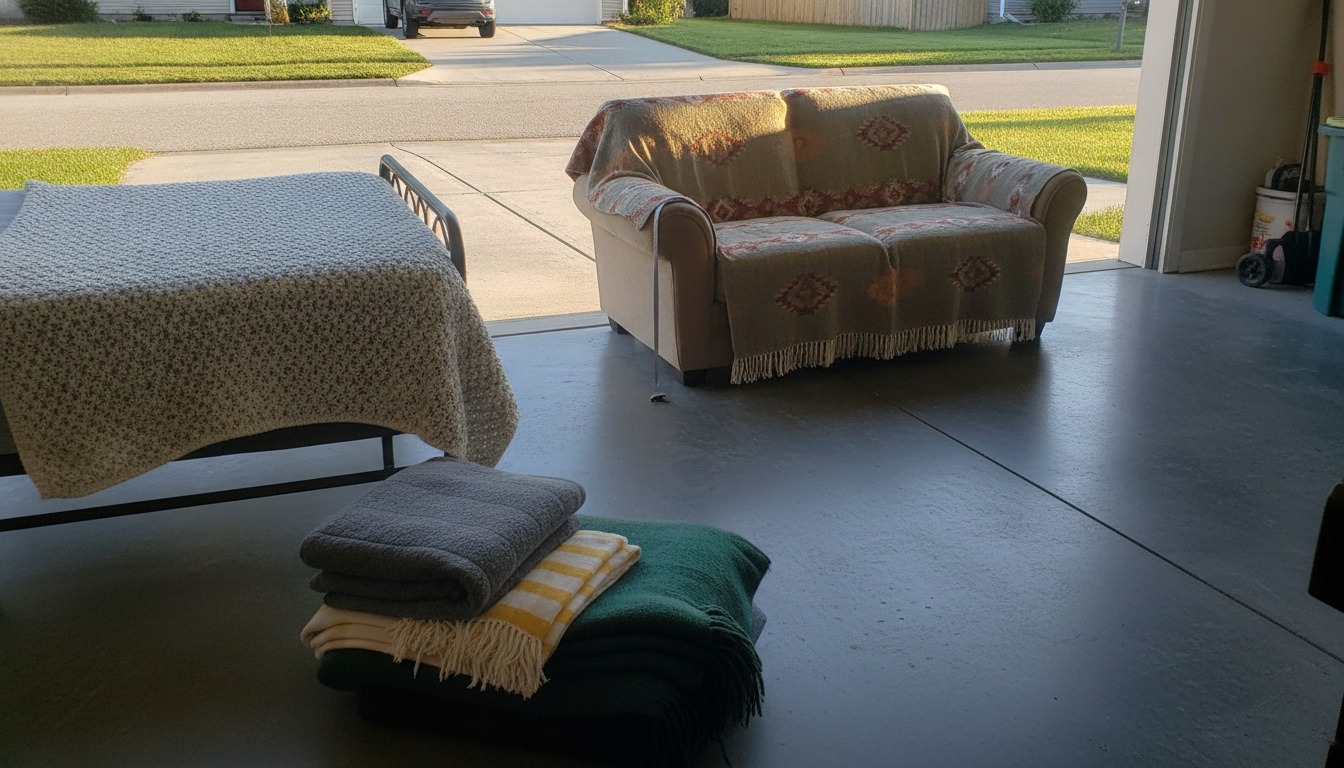
Start with how you plan to use the throw: a couch throw is usually sized for easy draping and daily snuggling, while a bed throw is typically wider (and sometimes longer) so it can sit neatly across the foot of the bed or add an extra layer without looking undersized.
For a standard sofa, a woven throw in the 50″ x 60″ range is a dependable choice. It’s large enough to cover your lap and legs, yet compact enough to fold over an armrest or back cushion without overwhelming the seating area.
If you have a deep sofa, a roomy sectional, or you want a more enveloping wrap, consider a larger throw around 60″ x 80″. That extra width helps it look intentional when draped and gives better coverage when two people share it.
On a bed, throws often look best when they’re sized to span most of the mattress width (or at least not look “narrow” at the foot). A 60″ x 80″ throw works well as an accent layer on many beds and can also function as a light top layer for one person.
For larger beds (especially queen and king), a wider option—often called an oversized throw—helps it read as a styled bed layer rather than a small blanket placed across the bottom. Aim for a throw that covers a substantial portion of the bed’s width, with a bit of drape on the sides for a polished look.
Measure the area you want to cover. On a couch, decide whether you want a casual armrest drape or full-body coverage. On a bed, decide if the throw is purely decorative (foot-of-bed layer) or if you’ll actually sleep under it—then size up accordingly.
For more detailed guidance and sizing examples, visit the main article.
Drape a 50″ x 60″ throw over one corner for a clean accent, or use a larger 60″ x 80″ size to span more of the chaise and invite lounging. Let a few inches cascade over the edge for a relaxed, layered look.







Leave a comment