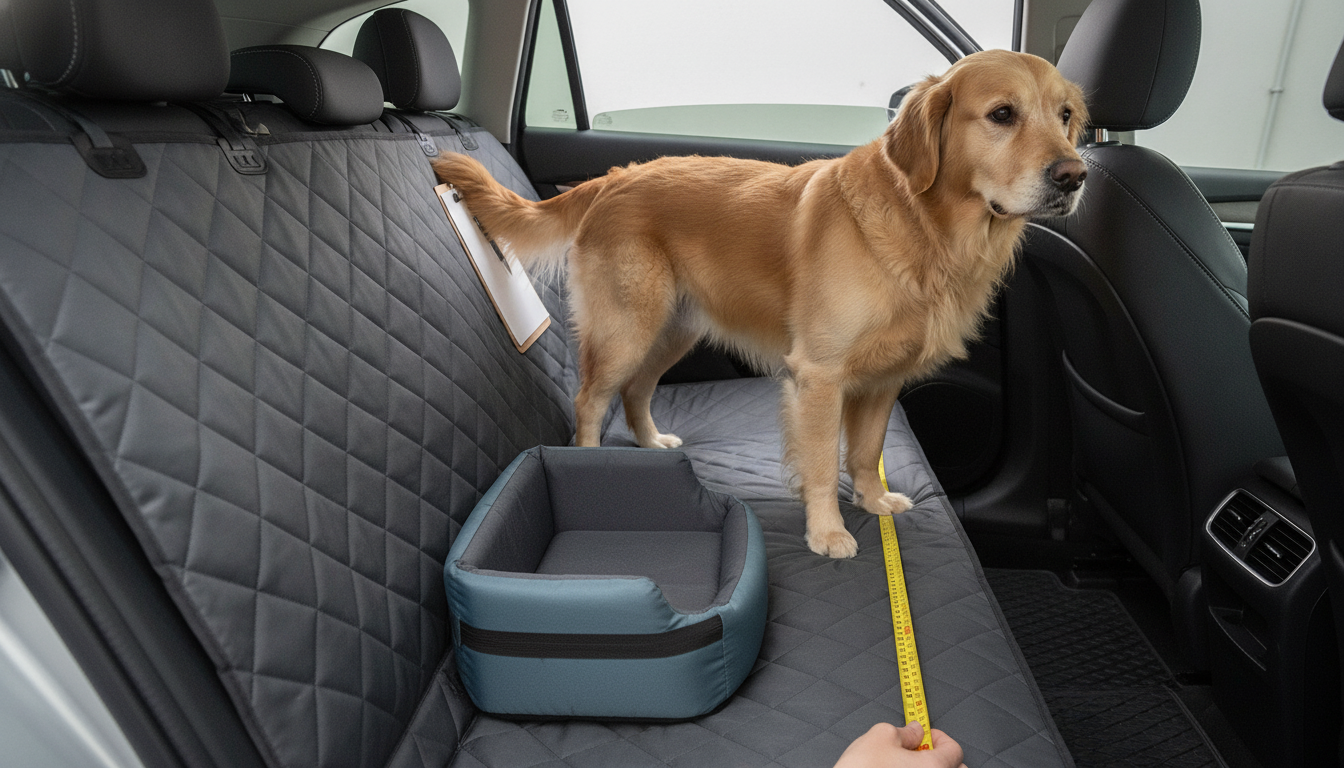
Measuring your dog for a car seat is mostly about getting the right interior space and a secure restraint fit—without forcing your dog into a cramped position. A good measurement takes only a few minutes and helps prevent sliding, tipping, and uncomfortable pressure points during rides.
Start with weight, since most dog car seats have a maximum weight rating. Use a home scale (weigh yourself, then weigh yourself holding your dog, and subtract) or your vet’s most recent weight. If your dog is near the seat’s limit, size up or choose a sturdier style that’s rated higher.
Have your dog stand naturally. Use a soft measuring tape and measure from the base of the neck (where a collar sits) to the base of the tail. This helps estimate how much flat space your dog needs to sit or lie down without curling tightly.
Wrap the tape around the widest part of your dog’s chest, just behind the front legs. Chest girth is key because the car seat tether should attach to a properly fitted harness (not a collar). If your dog’s chest is broad, a roomier seat plus an adjustable tether is usually more comfortable and safer.
With your dog sitting, measure from the floor to the top of the shoulders. Compare that to the car seat’s side height: high enough to support and reduce wobble, but not so high that your dog feels boxed in or can’t look out if that calms them.
Always prioritize the car seat’s interior (usable) width and depth over exterior size. Aim for enough room to shift positions while still feeling snug. If your dog likes to sprawl, pick the next size up—especially for longer drives.
For more tips on setting up a safer, cleaner ride and choosing the right protection for your car, visit this dog car seat and cover guide.
Yes. Clip the car seat tether to a well-fitted harness rather than a collar to reduce strain on the neck and help keep your dog more securely positioned during sudden stops.


Leave a comment