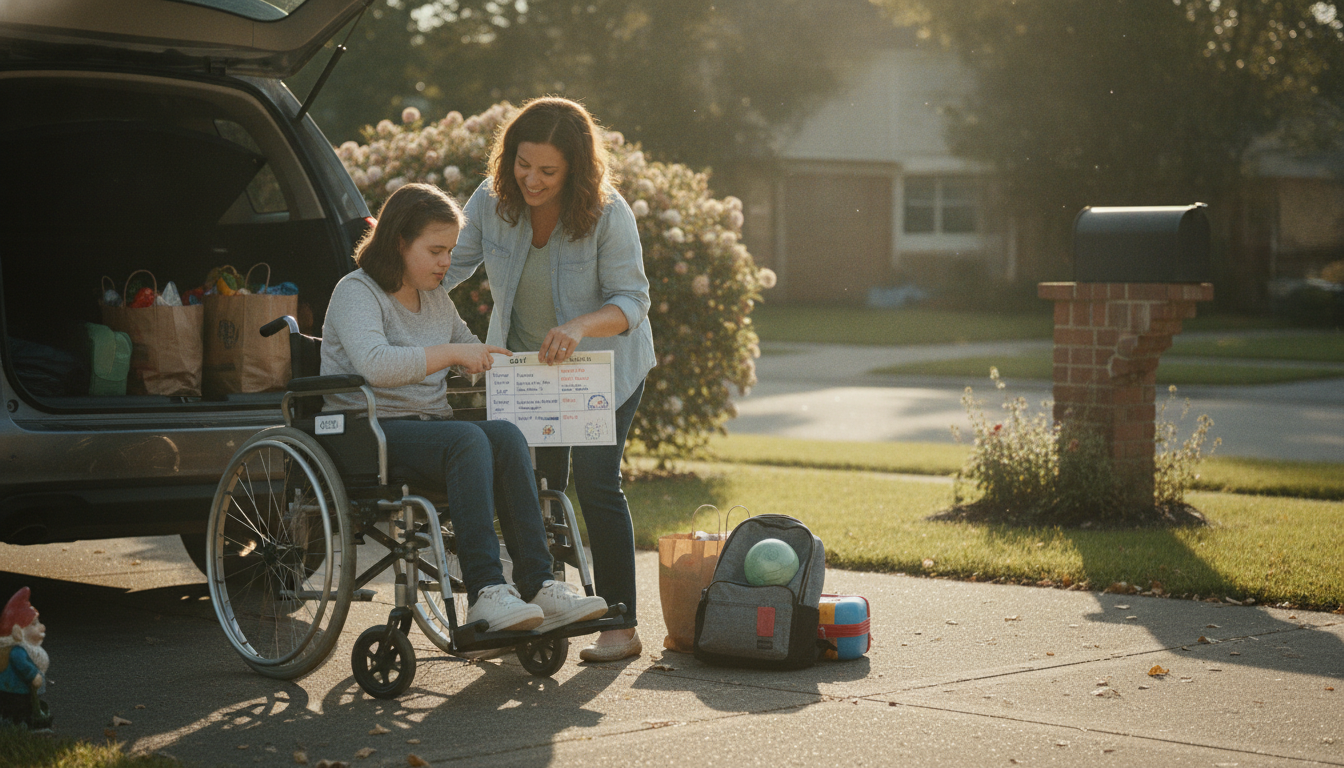
SMART goals for cerebral palsy are personalized, therapy-focused targets written to be Specific, Measurable, Achievable, Relevant, and Time-bound. They help families and care teams turn broad hopes—like “improve mobility” or “communicate more”—into clear next steps that can be practiced, tracked, and adjusted over time.
Specific means the goal names the exact skill (for example, “stand-to-sit transfer” rather than “get stronger”). Measurable adds a way to count progress (time, distance, repetitions, or level of assistance). Achievable keeps the target realistic for the child’s current abilities and supports. Relevant connects the goal to daily life—home routines, school participation, self-care, or play. Time-bound sets a deadline so progress can be reviewed at a predictable point.
Examples will vary by age, GMFCS level, and priorities, but a well-written SMART goal sounds like a plan you can actually practice:
Mobility: “Within 8 weeks, child will walk 50 feet using a posterior walker with no more than one rest break, on 4 out of 5 trials.”
Transfers: “In 6 weeks, child will move from wheelchair to bed using a transfer board with moderate assistance, completing the transfer in under 2 minutes on 3 consecutive days.”
Hand skills: “Over the next 10 weeks, child will use a pincer grasp to pick up 10 small items and place them into a container within 60 seconds, with verbal cues only, in 4 out of 5 sessions.”
Communication: “In 12 weeks, child will use an AAC device to request 5 preferred items with no more than one prompt per request, during snack time on 4 of 5 school days.”
Start with one or two functional priorities that make the biggest difference day to day (getting dressed, safer transfers, clearer requests, less fatigue). Ask the therapy team what will be measured and how often progress will be checked. If progress stalls, adjust the supports or the time frame rather than abandoning the goal.
For more detailed guidance and additional examples, visit What are SMART goals for cerebral palsy?.
Use the same measurement written into the goal—distance, time, repetitions, or level of assistance—and record it consistently (for example, weekly). Short notes from home practice plus periodic therapist re-checks make it easier to see real change and update the plan.





Leave a comment