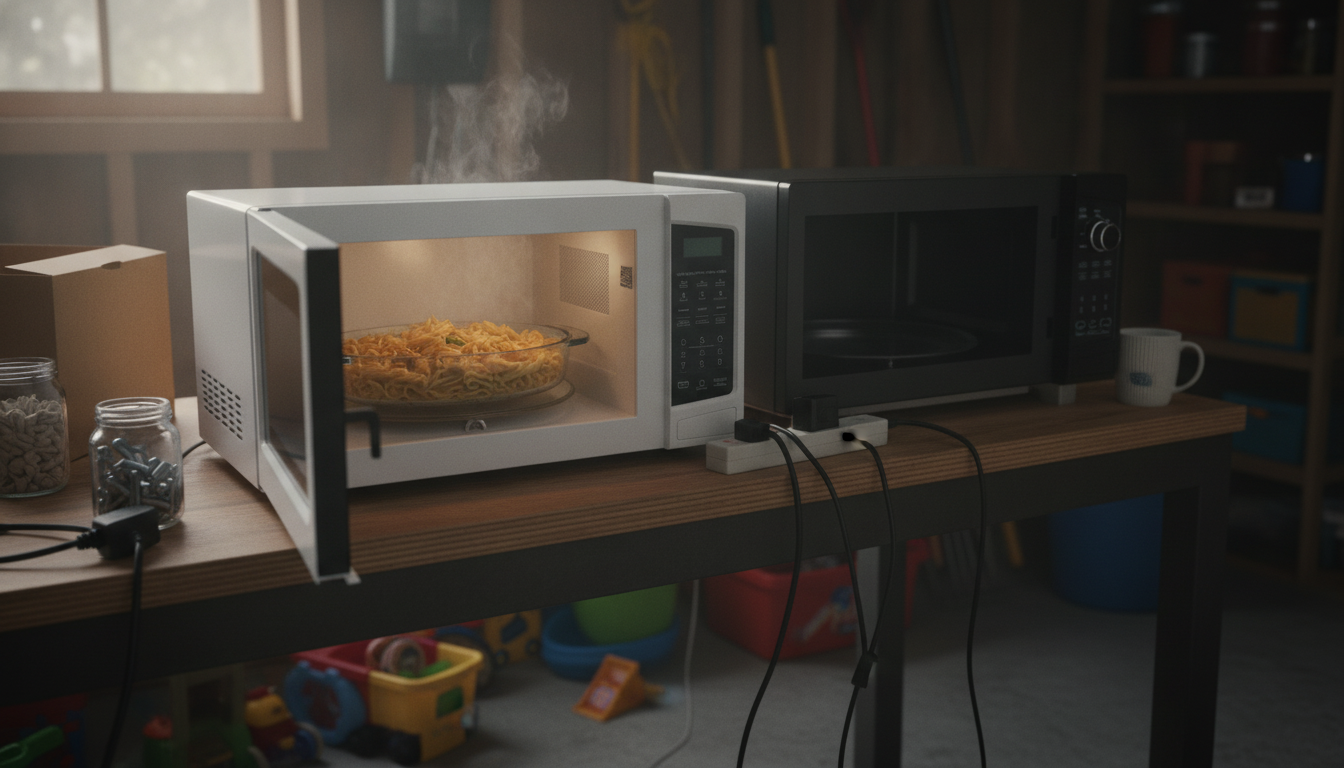
Microwaves with turntables are often “better” for everyday reheating because the rotating glass tray helps food pass through more of the microwave energy pattern, reducing cold spots. That said, they’re not automatically superior—some modern microwaves without turntables use different tech to spread energy more evenly, and they can be more flexible for large or oddly shaped dishes.
Microwaves heat food unevenly by nature because the waves bounce around the cavity, creating hot and cool zones. A turntable compensates by moving the food through those zones so more of it warms up over time. For leftovers, soups, and plated meals, this usually means fewer bites that are piping hot next to bites that are still cool.
A turntable can be especially helpful when you’re reheating smaller portions, warming sauces, or cooking items that don’t fill the cavity. It also makes results more predictable across different dishes, which is why many basic countertop models still rely on it.
Turntables take up usable space and can be limiting with big casserole dishes, wide plates, or rectangular containers that bump the walls as they rotate. They also add a couple of extra parts to clean (tray and roller ring) and can be noisy or prone to getting knocked off track if something spills.
Some are. Certain models use a rotating antenna/stirrer, specialized wave distribution, or “flatbed” designs to spread energy without moving the dish. These can fit larger cookware and may heat more consistently for certain loads—but performance varies by model and food type. For a deeper comparison of turntable vs. turntable-free designs, see the full guide here: https://alazare.com/are-microwaves-with-turntables-better/.
A flatbed microwave is a turntable-free design with a flat cooking surface, making it easier to fit large or rectangular dishes. It relies on internal wave distribution components rather than rotating the food.




Leave a comment