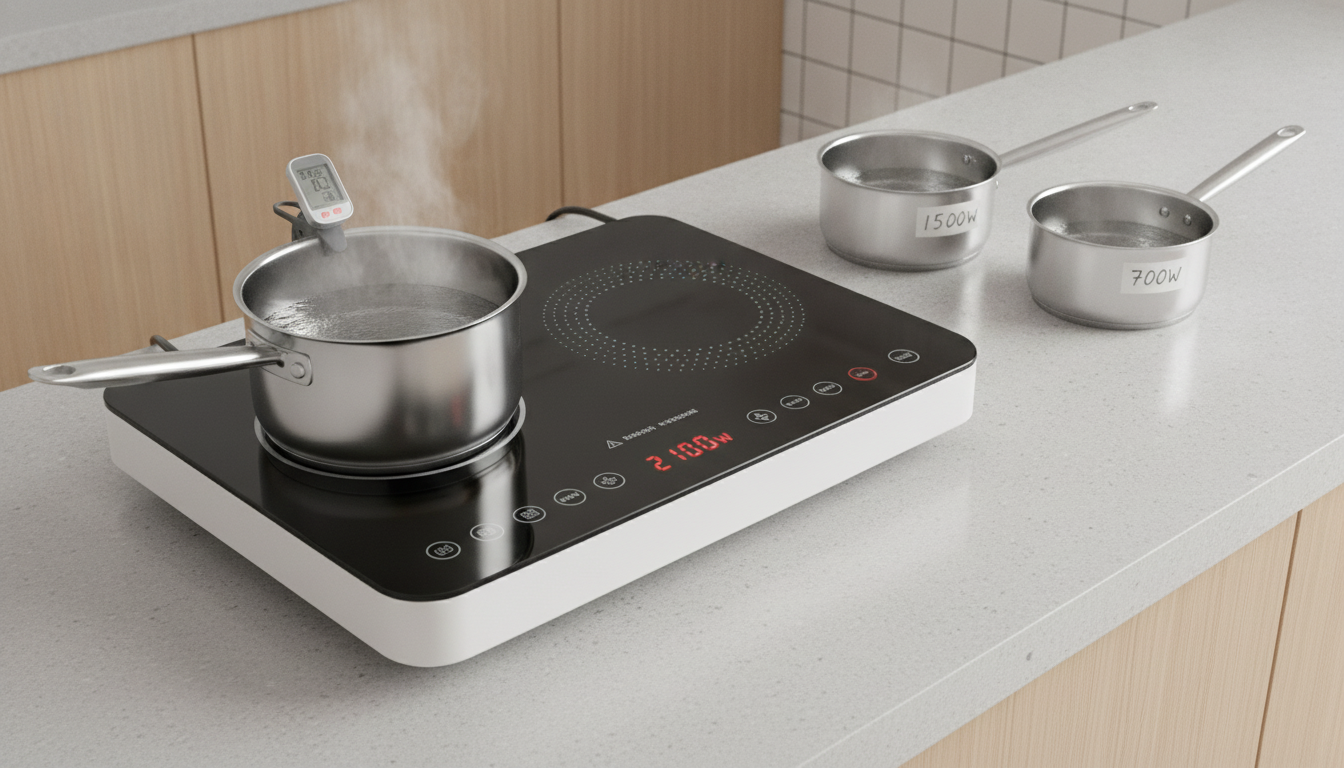
“2100W” is the maximum power output (2,100 watts) that a single induction zone can deliver under the right conditions. On induction, watts translate directly into how much energy can be pushed into the cookware, because the pan itself is heated by a magnetic field rather than by warming a burner first. In practical terms, a 2100W zone is a high-power “boost” level that’s designed to bring water to a boil faster, sear more aggressively, and recover heat quickly after adding cold ingredients.
Compared with a common 1500W zone, 2100W provides about 40% more peak power (2100/1500 = 1.4). That doesn’t always mean meals cook 40% faster, but the high-watt zone typically shortens the slowest parts of cooking—like getting a pot from room temperature to a simmer or bringing a skillet back up to temperature after food hits the pan.
Against a smaller 1200W burner, the difference is even more noticeable for large pots and high-heat tasks, since 2100W can better maintain a rolling boil and reduce “stalling” when you add pasta, vegetables, or chilled liquids.
Heating speed depends on more than the number on the label. A 2100W induction zone will perform best with flat, induction-compatible cookware that closely matches the diameter of the cooking zone. Thick stainless steel or cast iron may take slightly longer to ramp up, but it holds heat well once hot. Also note that many cooktops limit total power across multiple burners; using several zones at once can reduce the power available to any one zone.
For a deeper breakdown of wattage ratings, boost mode behavior, and what to expect in everyday cooking, visit the main guide on 2100W induction cooktops.
Yes. The pan must be magnetic (a magnet should stick to the bottom) and ideally have a flat base that matches the burner size for the fastest, most even heating.





Leave a comment