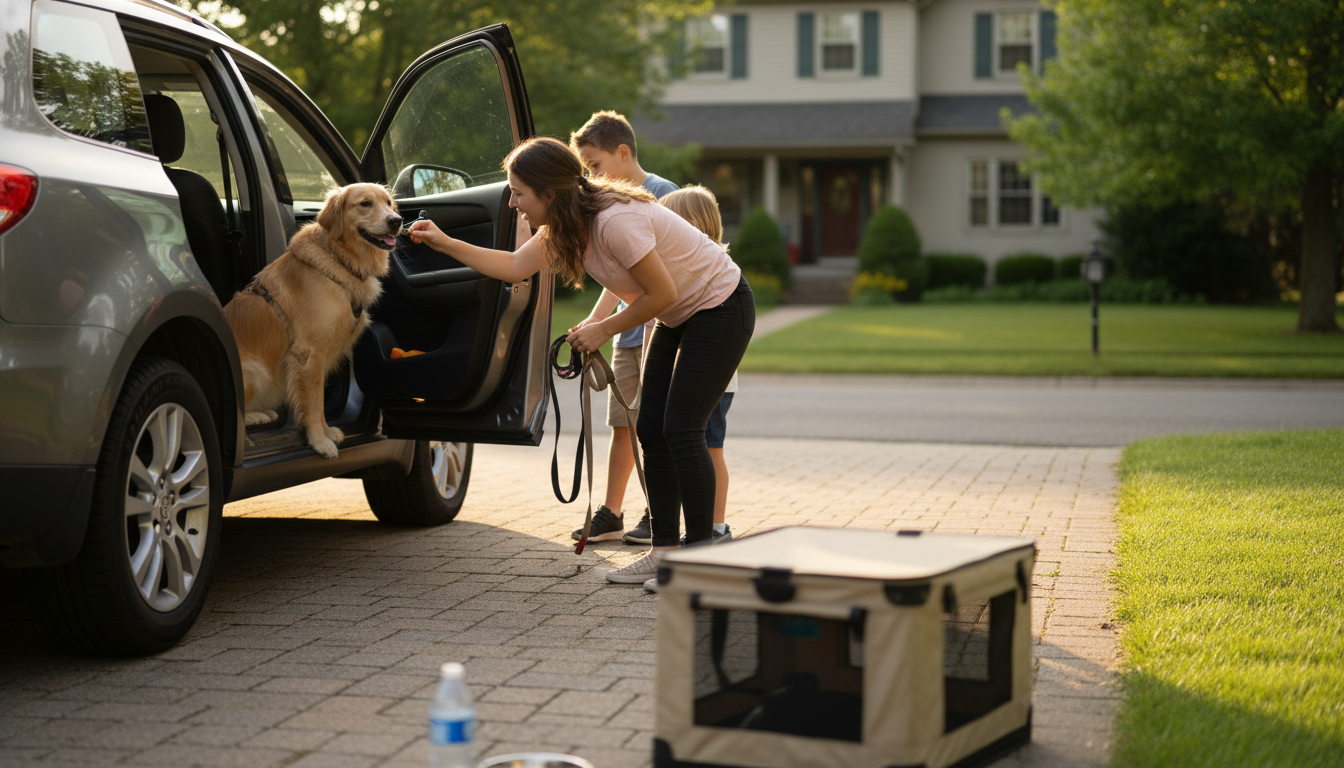
In most places in the U.S., it’s not automatically illegal for a dog to ride in the front seat. The legal trouble usually comes from related issues: driver distraction, an unrestrained animal that interferes with safe operation, or a dog that blocks your view, access to controls, or airbag space. Some states and localities also have animal-restraint rules (or broader “load securement” or distracted-driving laws) that can be applied if a loose pet creates a hazard.
A front-seat dog can be considered unsafe—and therefore citable—if it jumps on the driver, sits on the driver’s lap, presses against the steering wheel, or otherwise affects steering, braking, or visibility. If you’re involved in a crash and the dog was loose, that can also complicate liability and may lead to additional citations depending on the jurisdiction and circumstances.
Even where it’s legal, the front seat is typically the most dangerous spot for a dog because of airbags and hard surfaces. An airbag can seriously injure a dog sitting too close to the dashboard, and sudden stops can turn an unrestrained pet into a projectile. For many dogs, the safest setup is the back seat with a crash-tested harness or a secured carrier.
If your dog must ride up front, use a properly fitted harness and a seat-belt tether designed for pets, keep the dog off your lap, and prevent roaming between seats. Many drivers also find that a dedicated seat cover helps reduce slipping and keeps claws, dirt, and hair from turning the cabin into a distraction. For options and setup tips, see this guide to dog car seat covers for cleaner, safer rides.
A front seat extender is a cushion or platform that fills gaps around the front seat area to create a flatter surface and reduce slipping. It’s meant to help a dog stay stable, though it should still be used with a restraint system for safety.






Leave a comment