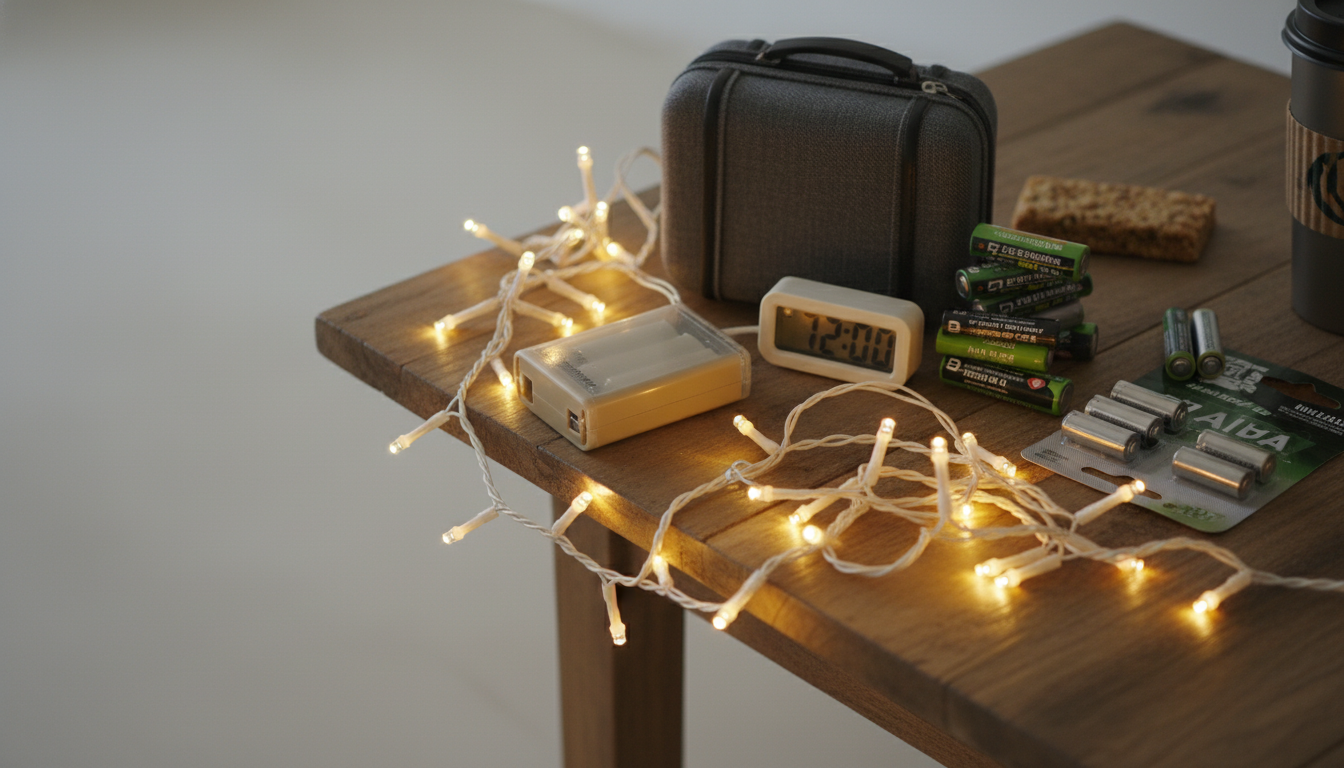
Battery life in LED Christmas lights typically ranges from about 24 to 72 hours of continuous use, but the real-world number depends heavily on the battery type, how many LEDs are on the strand, and whether the set has special features like timers or flashing modes. Because LEDs use far less power than incandescent bulbs, battery-operated LED strings can run for days—especially when they’re used a few hours each night instead of nonstop.
AA batteries usually last longer than AAA because they store more energy. Fresh alkaline batteries often provide solid runtime, while lithium AAs can last longer in cold outdoor conditions. Rechargeable NiMH batteries can work well, but their runtime per charge may be shorter than premium alkalines, depending on the mAh rating.
A short strand with fewer LEDs draws less power than a long strand packed with bulbs. Some strings also use thicker wire or more efficient circuitry, which can reduce energy loss and extend runtime.
Steady-on at full brightness drains batteries faster than dimmed settings or twinkle patterns. A built-in timer (such as 6 hours on/18 hours off) can dramatically stretch how many days you get from one set of batteries by limiting daily runtime automatically.
For longer performance, use high-quality AA batteries when possible, enable the timer mode, and avoid maximum brightness if your set offers dimming. If you’re decorating outdoors, choose lithium batteries for better cold-weather output. Turning lights off when they’re not needed can also add multiple days to a single battery set.
For deeper runtime estimates and practical tips (including how different settings change battery drain), visit the full guide here: https://alazare.com/how-long-do-batteries-last-in-led-christmas-lights/.
Many do. Common timer options run the lights for a set period (often 6 hours) and then shut them off automatically, which can significantly extend battery life.




Leave a comment