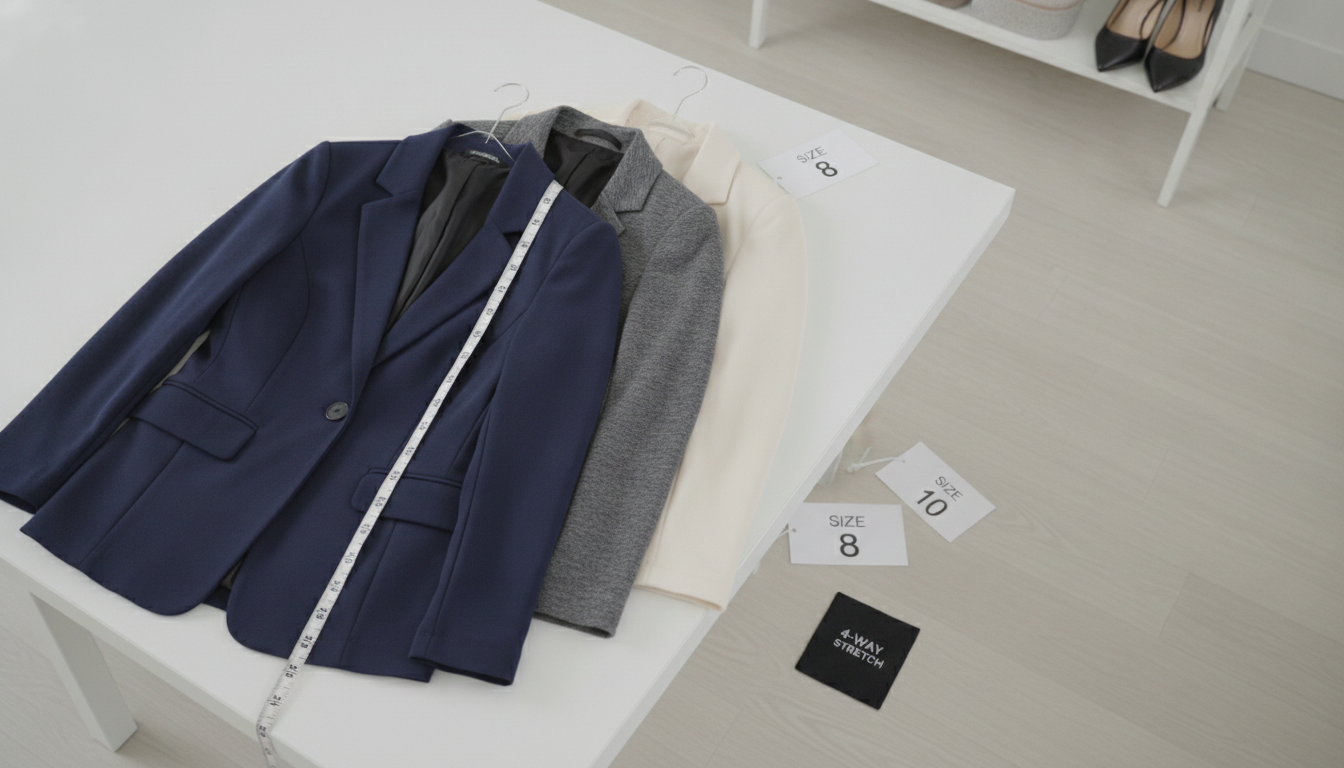
Start with your measurements, then let the blazer’s intended office silhouette guide the final pick. A stretch blazer should look polished and structured, but it shouldn’t feel restrictive when you sit, type, or reach for items throughout the day.
Use a soft tape measure and take three key measurements over a thin top: bust (fullest part), waist (natural waist), and hips (fullest part). For blazers, shoulder fit is also crucial—if your shoulders are broader or narrower than average, prioritize the measurement notes in the brand’s size chart. Compare your numbers to the specific chart for the blazer, not your usual “S/M/L” habit.
If you’ll wear it mostly over blouses or lightweight knits, choose a closer fit that skims the body without pulling. If you plan to layer over thicker sweaters, size up or choose a cut labeled “relaxed” or “boyfriend” so the blazer can close comfortably without straining at the buttons.
Stretch can be forgiving, but it shouldn’t be your only sizing strategy. A good stretch blazer should lie flat across the bust when buttoned, with no “X” pulling at the front. If the fabric has high stretch, you may be able to stay true to your measurements; with minimal stretch, follow the size chart more strictly.
When you try it on, lift your arms forward and overhead, then sit and button the blazer. The lapels should stay relatively smooth, the hem shouldn’t ride up dramatically, and the back shouldn’t feel tight across the shoulder blades. Sleeve length should hit around the wrist bone for a classic office look (or slightly shorter for a modern, intentional crop).
For a deeper walk-through—including fit checks and sizing tips—visit the main article.
A professional fit is usually “tailored”: close to the body with room to move. It should button without pulling and allow comfortable sitting and reaching, while still keeping clean lines at the shoulders and lapels.



Leave a comment