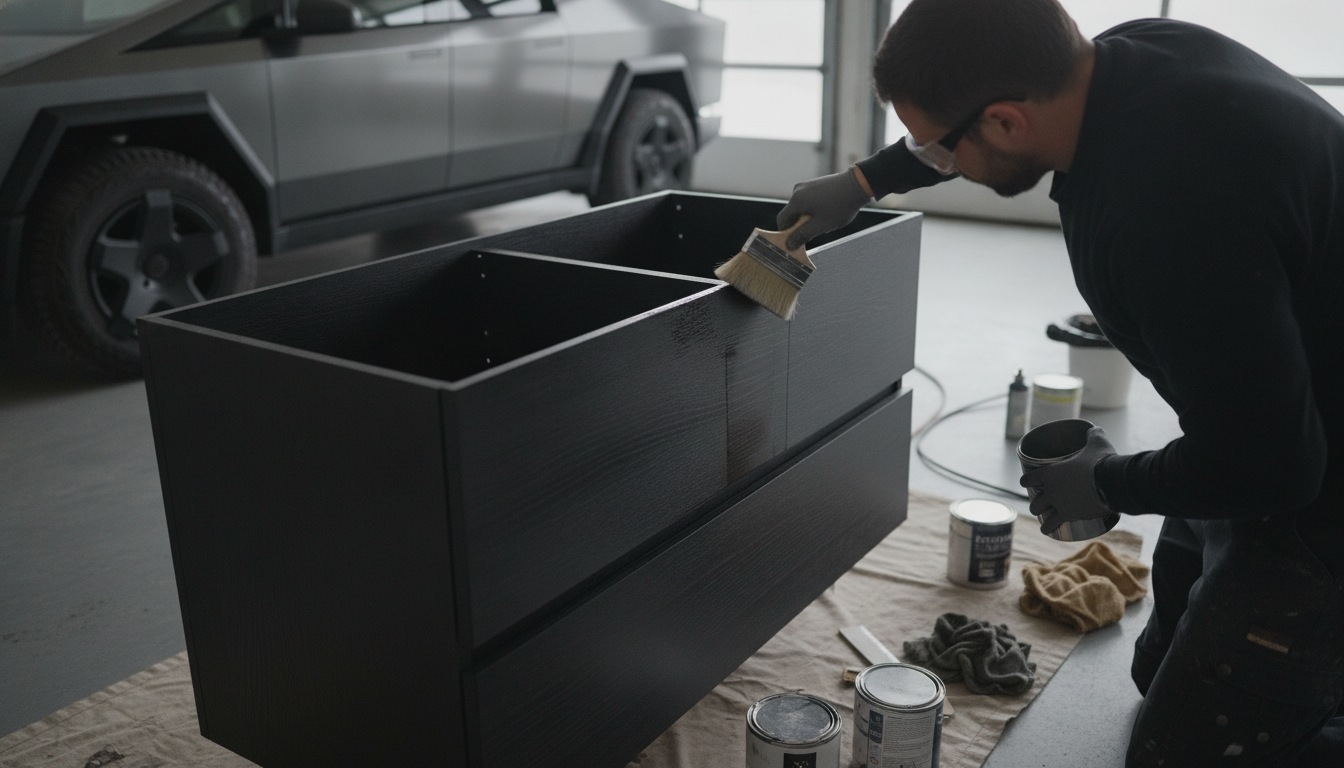
Yes. A black oak bathroom vanity cabinet benefits from moisture-focused sealing, not because oak is weak, but because bathrooms deliver constant humidity swings, splashes, and lingering condensation. Dark finishes also make water spots, edge swelling, and tiny finish breaks more noticeable over time. A good seal helps keep the wood stable, protects the finish, and makes daily wipe-downs easier.
For a vanity, “special sealing” usually means reinforcing the most vulnerable areas rather than coating every surface with a heavy film. The goal is to block moisture entry at seams, edges, and cutouts while keeping the finish looking consistent.
Most bathroom vanity damage doesn’t start on the front face—it starts where you don’t look daily. Pay extra attention to the cabinet base (especially if mopping is frequent), the interior floor of the cabinet, and any joints where panels meet. If those areas aren’t sealed well, you can see swelling, peeling at edges, or a “raised” feel along seams.
Even a well-sealed black oak vanity performs better with simple routines: run the fan during and after showers, wipe standing water promptly, and avoid harsh cleaners that can dull or soften topcoats. If a plumbing drip happens, dry the interior quickly and don’t let a damp mat or towel sit against the cabinet base.
For a deeper breakdown of what to seal, what products are typically used, and how to prevent common finish issues, visit the main guide: https://alazare.com/does-a-oak-bathroom-vanity-cabinet-need-special-sealing-to-handle-moisture/.
Wipe splashes right away with a soft microfiber cloth, then dry the surface. Use a gentle, non-abrasive cleaner and avoid ammonia or strong solvents that can haze or weaken the protective topcoat.



Leave a comment