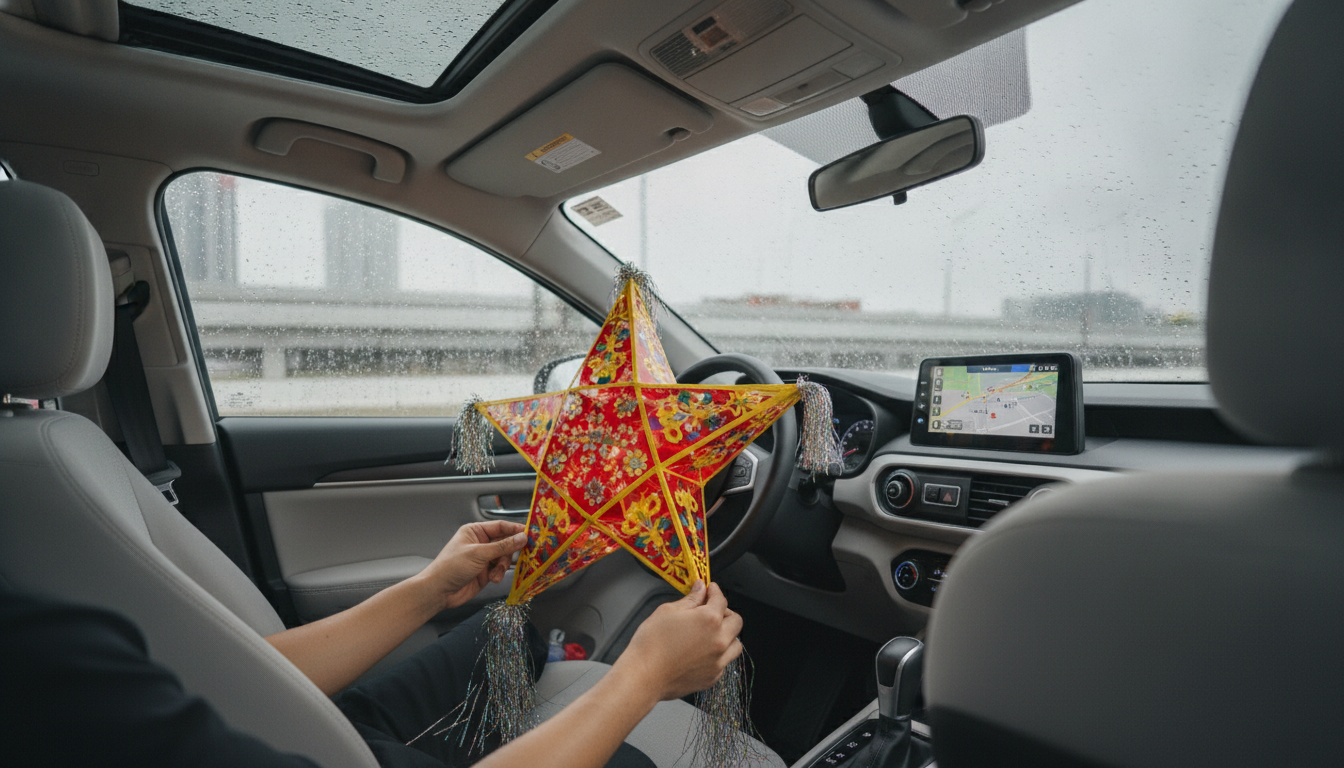
The traditional Filipino Christmas lantern is the parol, a star-shaped lantern commonly displayed throughout the holiday season in the Philippines and in Filipino communities worldwide. Made to glow at night—originally with candles and now often with electric lights—the parol is hung outside homes, along streets, and in churches to mark Christmas celebrations and to brighten evening gatherings.
A parol is more than seasonal décor; it’s a cultural symbol associated with the Christmas spirit in the Philippines. Its most recognizable form is a five-pointed star, frequently interpreted as representing the Star of Bethlehem. Parols are traditionally crafted from bamboo frames and covered with paper, plastic, or capiz shells, then finished with colorful tassels and illuminated centers. Modern versions may use LEDs, intricate metalwork, or woven materials while keeping the signature star silhouette.
Parols are especially connected to the long Filipino Christmas season and the tradition of dawn Masses known as Simbang Gabi. Neighborhoods and towns often create large lantern displays, and in places like Pampanga—often called the “Christmas Capital of the Philippines”—lantern-making is treated as a proud art form passed down through generations. Whether simple and handmade or ornate and competition-worthy, the parol is widely viewed as a sign of welcome, joy, and togetherness during the holidays.
For a deeper look at the parol’s history, meaning, and styles, visit the full guide here: https://alazare.com/what-is-the-traditional-filipino-christmas-lantern/.
For Parol: The Traditional Filipino Christmas Lantern, the best answer depends on fit, material, care instructions, and how the product will be used day to day.
Checking those details first helps avoid a poor match and keeps the choice practical after delivery.
For Parol: The Traditional Filipino Christmas Lantern, the best answer depends on fit, material, care instructions, and how the product will be used day to day.
A parol commonly symbolizes the Star of Bethlehem and the hope and light associated with the Christmas season. It’s also widely seen as a symbol of Filipino hospitality and celebration.






Leave a comment