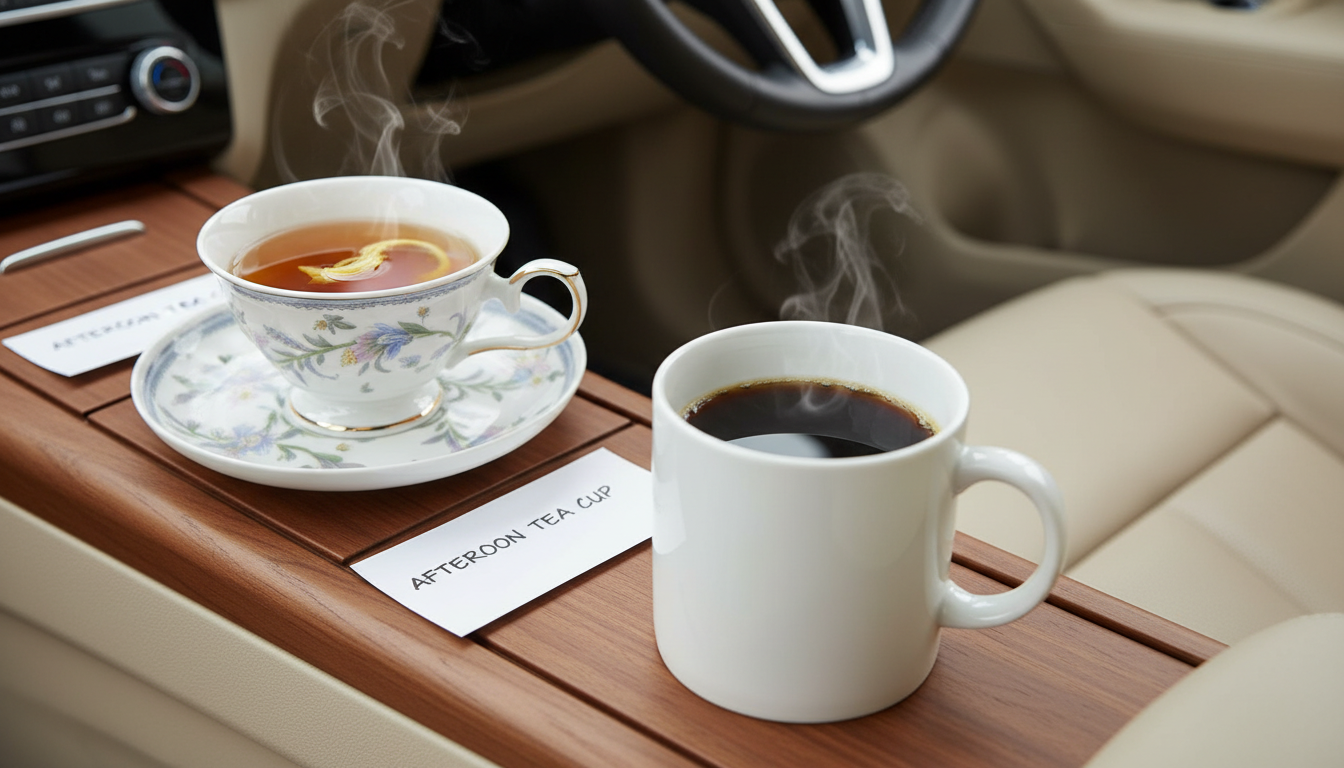
The main difference comes down to shape, size, and how each cup is meant to be used. An afternoon tea cup is typically smaller and wider, designed to showcase aroma and allow tea to cool to a comfortable sipping temperature. A coffee cup (or mug) is usually larger and taller, built to hold more liquid and keep it warm longer.
Traditional afternoon tea cups tend to hold a modest pour—often enough for a single serving without overwhelming the saucer setting. Coffee cups generally have a larger capacity, since coffee is frequently served in bigger portions (especially in modern cafés and at home).
Tea cups are commonly more open at the top, with a slightly flared rim. That wider opening helps release the tea’s aroma and makes delicate teas feel lighter on the palate. Coffee cups are often more cylindrical with a narrower opening, which helps retain heat and concentrate the drink’s warmth.
Afternoon tea cups often have smaller, more refined handles meant for a gentle grip—consistent with the formal, slower pace of tea service. Coffee cups typically have sturdier handles for a secure hold, especially when the beverage is served hot and in larger quantities.
Afternoon tea cups are closely tied to a saucer and a coordinated set, since tea service traditionally includes pastries, sandwiches, and multiple courses. Coffee cups may come with a saucer as well, but they’re just as likely to be used on their own as an everyday mug.
For a deeper look at materials, traditional place settings, and how each cup fits into classic service, visit the full guide on afternoon tea cups vs. coffee cups.
Many afternoon tea cups are smaller than standard coffee mugs, often designed for a modest serving that can be refilled from a teapot. The exact capacity varies by set, but the emphasis is on a lighter pour suited to a multi-course tea service.





Leave a comment