
If a traditional dining table feels too bulky or you rarely host formal meals, there are plenty of stylish, functional alternatives that still give everyone a place to gather. The best replacement depends on how you eat (quick breakfasts vs. long dinners), how much floor space you have, and whether you want the piece to double as storage or work space.
An island with overhang seating can replace a dining table entirely, especially in open-concept layouts. It keeps traffic flow open, adds prep space, and works well for casual meals or entertaining where guests naturally linger near the kitchen.
Bar tables take up less visual space than a full dining table and can tuck neatly against a wall. Pair with backless stools to slide everything in when not in use, making it a smart choice for apartments and narrow dining zones.
A built-in or freestanding banquette creates a cozy “always ready” dining spot while maximizing seating in tight corners. Many benches offer hidden storage under the seat—ideal for linens, serving pieces, or small appliances.
These slim consoles look like a hallway table most days, then expand into a full dining surface when needed. They’re a strong option for occasional hosts who don’t want a permanent large footprint.
If your home needs a workspace more than a dedicated dining area, a sturdy writing desk or work table can do both. Choose a durable wood surface, comfortable chair height, and enough depth for plates without crowding.
For a relaxed, lounge-style setup, a low table can replace dining furniture—especially for small households. It’s best for informal meals and works well in rooms designed around a sofa rather than a dining set.
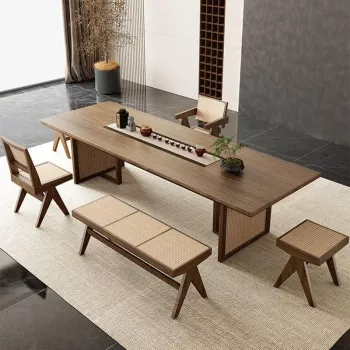
Start with seat count, clearance (aim for comfortable walkways), and how often you entertain. If you love warm, timeless materials, consider how solid wood and traditional craftsmanship elevate any alternative setup. For inspiration on refined hosting spaces and statement wood pieces, visit this guide to a luxurious Chinese wooden dining table for hosting.
Plan for enough room to pull out chairs and walk behind seated guests; tighter layouts benefit from benches, stools, or expandable designs. If space is limited, prioritize clear pathways over oversized furniture.



Leave a comment