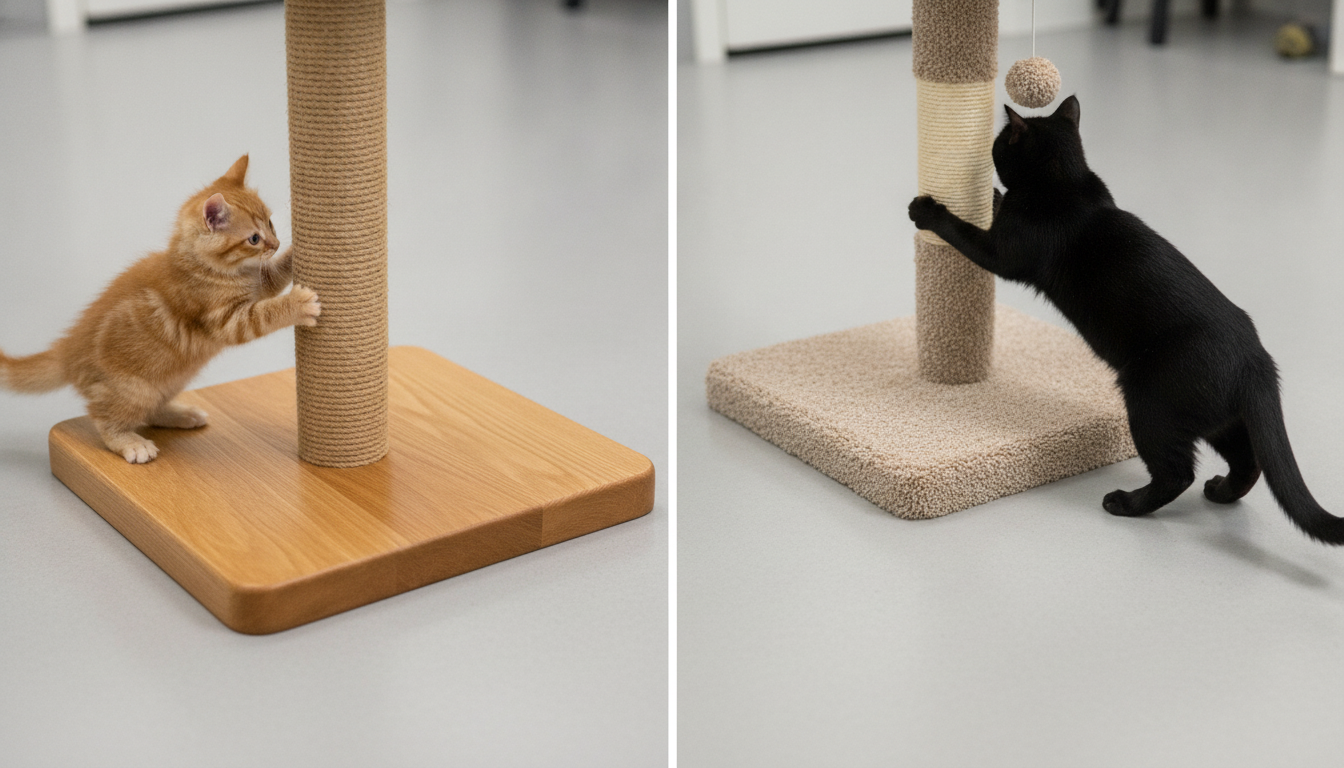
In most cases, yes—a scratching post with a solid wood base is more stable than one that relies on a carpet-covered base. Solid wood adds dense, rigid weight that resists rocking when your cat stretches, climbs, or scratches with force. Carpet-covered bases can work well, but they’re typically lighter and may slide more easily on smooth floors unless they’re oversized or backed with a grippy material.
Stability comes down to three main factors: base weight, footprint size, and how securely the post is attached. Solid wood usually wins on weight and stiffness, which helps keep the post upright when your cat pulls downward or leans sideways. If a post wobbles, many cats simply stop using it—especially energetic cats or larger breeds that need something that won’t tip.
That said, carpet coverage isn’t automatically a downside. A carpet-covered base that’s wide, heavy, and properly fastened can be very stable. Some designs hide a thick particleboard or plywood platform under carpet; these can perform similarly to solid wood, depending on thickness and construction. The key is whether the base stays planted and the post doesn’t flex at the joint.
If you’re choosing between two posts, look for: a wide base relative to post height, a heavier platform (solid wood or thick engineered wood), non-slip feet or a rubberized underside, and sturdy hardware (bolts that tighten firmly, not small screws that loosen quickly). For a deeper breakdown of what affects tipping and wobble, read the full guide here: Is a solid wood base more stable than a carpet-covered scratching post?
A good rule is a wide footprint that’s at least as broad as your cat’s body length and heavy enough that the post won’t shift when pushed from the side. Taller posts generally need a wider, heavier base to stay steady during full-body stretches.

Leave a comment