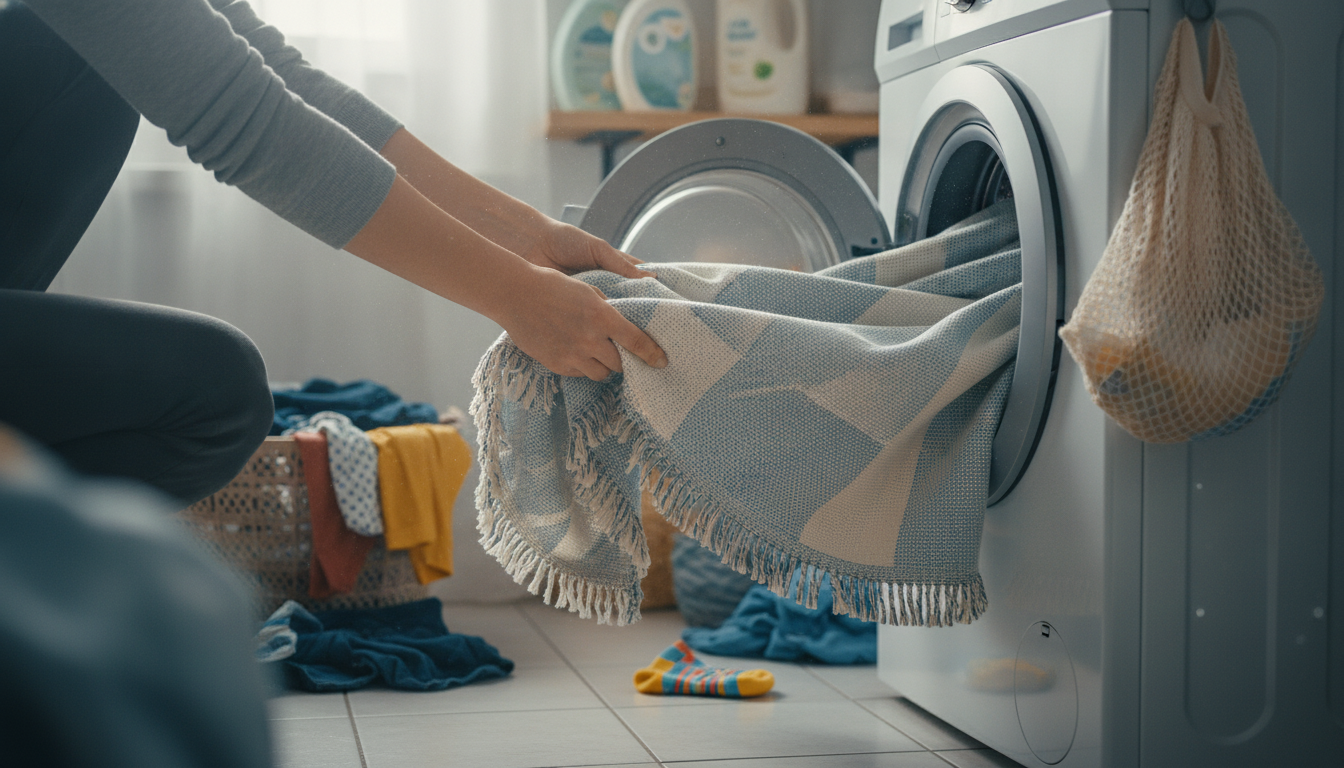
To wash a woven thread blanket without shrinking or fraying, start by checking the care label for fiber content and temperature limits. When in doubt, choose the gentlest route: cool water, mild detergent, minimal agitation, and low heat (or air-dry). Those choices protect the weave, keep the blanket’s size stable, and reduce stress on the edge stitching.
Before washing, give the blanket a quick inspection. If you see loose threads or edge binding that’s separating, avoid pulling—trim a stray thread carefully and consider a few hand stitches (or fabric-safe mending tape) to stabilize the area. Shake the blanket outside to remove dust and crumbs so you don’t need a harsh cycle to get it clean.
For machine washing, place the blanket in a large mesh laundry bag (or a zippered duvet cover) to cut down on friction that can fuzz up threads and roughen edges. Select a delicate or hand-wash cycle with cold water. Use a small amount of gentle liquid detergent; skip bleach and most fabric softeners, which can weaken fibers and leave residue that attracts lint.
For hand washing, soak the blanket in cool water with a little detergent for 10–15 minutes, then press the water through the fabric rather than wringing. Rinse until the water runs clear. To remove water, roll the blanket in a clean towel and press—wringing can distort the weave and strain the border.
Drying is where most shrinking happens. Air-dry flat on a rack or clean surface, reshaping the blanket to its original dimensions and smoothing the edges. If the label allows a dryer, use the lowest heat setting and remove while slightly damp, then lay flat to finish drying. For more detail and material-specific tips, see the full guide here: https://alazare.com/how-do-you-wash-a-woven-thread-blanket-without-shrinking-or-fraying-the-edges/.
Only if the care label allows it; otherwise, air-dry flat to prevent shrinkage and edge wear. If drying is permitted, use low heat and remove the blanket while slightly damp, then finish drying flat to maintain shape.






Leave a comment