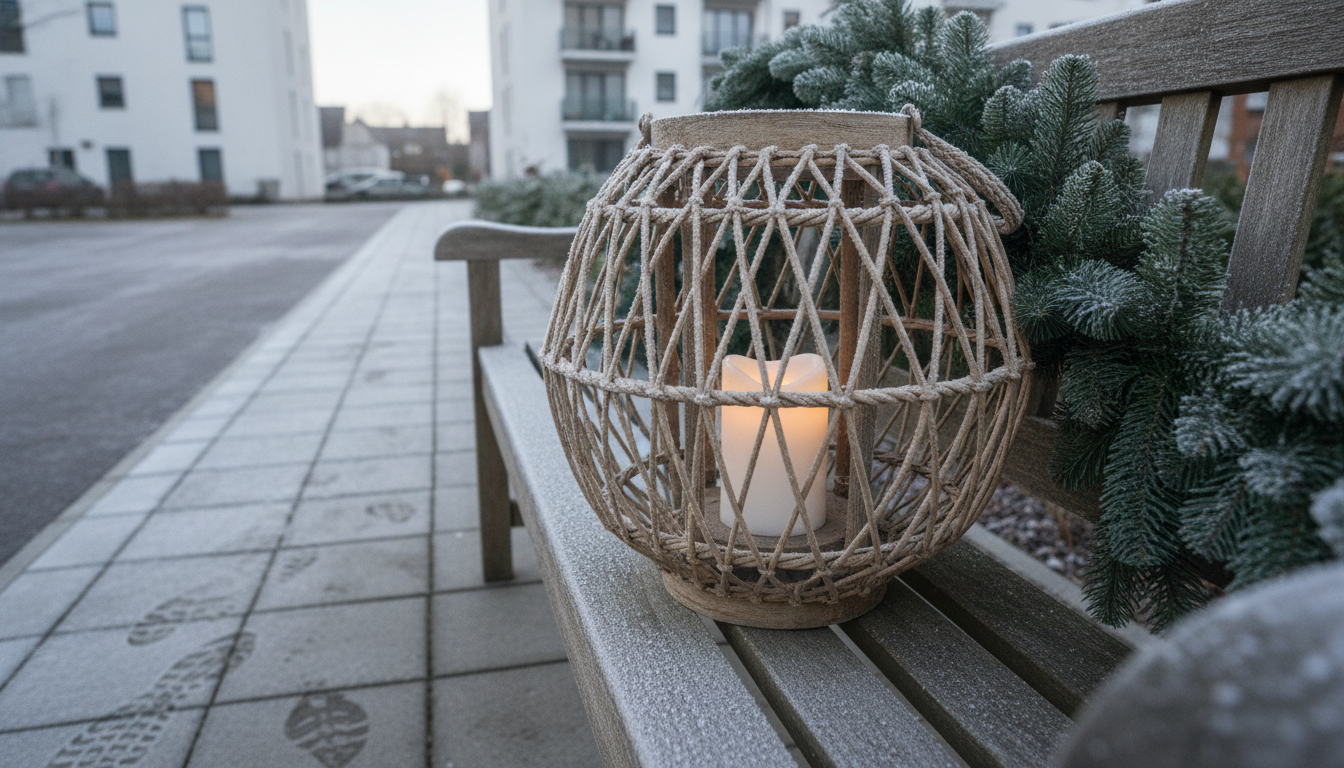
A rattan lantern can be used outdoors in winter, but it depends on the type of rattan, how it’s built, and how much exposure it gets to moisture, freezing temperatures, and wind. Natural rattan is a plant fiber that can absorb water and become brittle or warped after repeated freeze-thaw cycles. If the lantern will sit in snow, get rained on, or stay outside for weeks at a time, it’s more likely to crack, loosen at the weave, or develop mildew once temperatures swing back up.
For occasional winter use—like bringing it outside for an evening gathering and storing it afterward—a rattan lantern can work well. The key is treating it like a decorative outdoor accessory rather than a set-it-and-forget-it fixture.
Moisture is the biggest issue. Rain, melting snow, and high humidity can soak into natural rattan, and freezing temperatures can cause fibers to stiffen and weaken. Strong winds can also tug at the weave or knock the lantern over, especially if it’s lightweight or hung from a hook.
Place it in a covered area such as a porch, pergola, or under an awning. Keep it off the ground and away from puddles or snowbanks. If you’re using candles, choose a glass insert or enclosed candle cup to reduce soot on the fibers and to help shield the flame from wind. LED candles are often the easiest winter option because they avoid heat stress and open-flame risks.
Bring the lantern indoors after use, especially overnight. If it gets damp, dry it promptly in a warm, well-ventilated spot (not directly against a heater). For longer cold-season storage, keep it in a dry room or sealed bin with airflow and avoid compressing the weave.
For more detailed guidance on winter placement, care, and material considerations, visit https://alazare.com/can-a-rattan-lantern-be-used-outdoors-in-winter-weather/.
Use it in covered outdoor spaces, keep it dry, and store it indoors between uses. If it’s natural rattan, minimizing moisture exposure is more effective than relying on coatings that can crack in cold weather.





Leave a comment