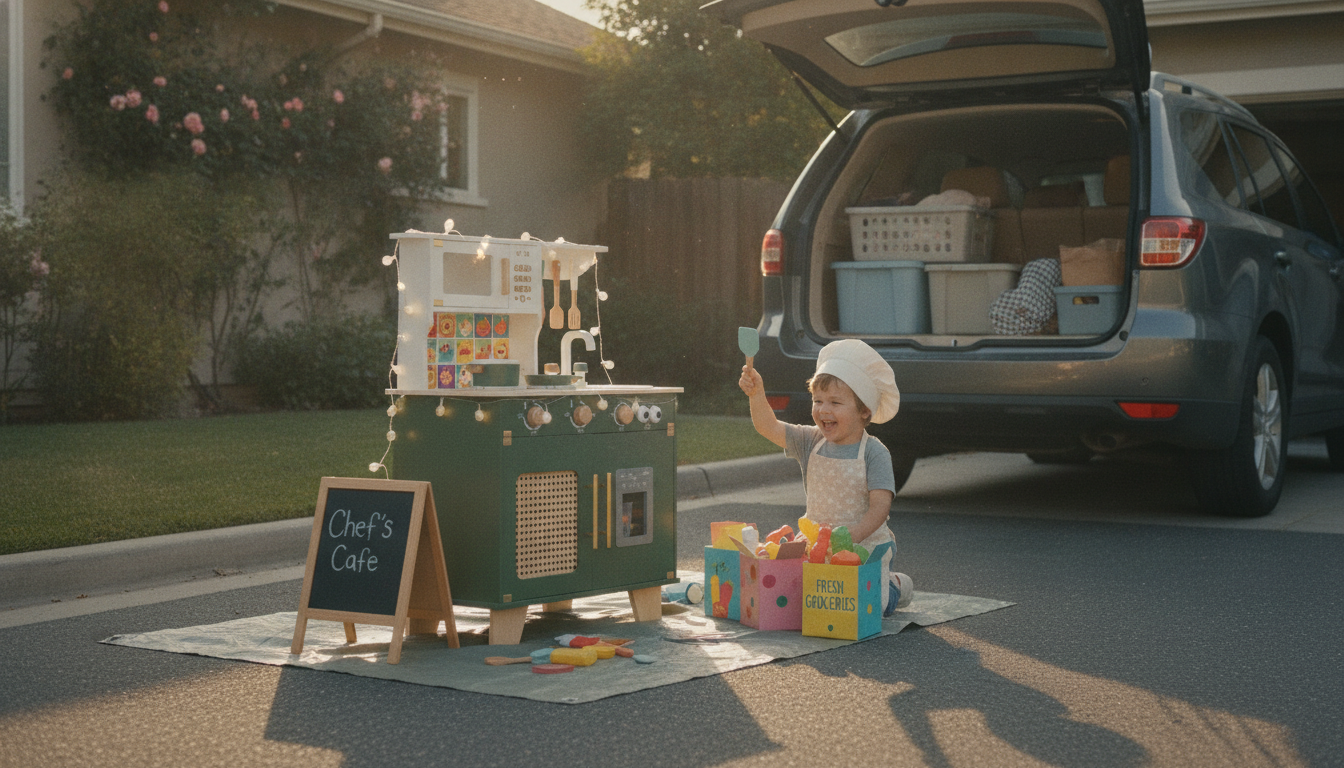
To make a play kitchen more fun, treat it like a real “working” space: add rotating accessories, introduce playful challenges, and create reasons for kids to come back to it every day. A few small upgrades can turn basic pretend cooking into longer, richer play.
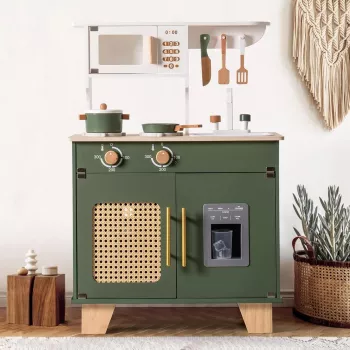
Kids stay engaged when they have enough “equipment” to invent new scenarios. Add a mix of utensils (spatula, tongs, whisk), pretend cookware (small pots, pans, baking sheet), and serving pieces (plates, bowls, cups). Include a few safe, real items—like a silicone brush or a wooden spoon—to make play feel more authentic.
Instead of one set of toy food forever, rotate options. A small bin labeled “produce,” another for “breakfast,” and a third for “snacks” can spark new ideas without adding clutter. Empty, clean food boxes (cereal, pasta) also make pretend grocery play more convincing.
A simple notepad becomes an order pad, and index cards become a menu. Add play money or a small coin pouch for a restaurant or café game. For extra replay value, create “specials” cards like “Soup of the Day” or “Birthday Cupcakes,” so kids can pick a new theme each time.
Short prompts keep play moving: “Make a rainbow lunch,” “Serve three customers in five minutes,” or “Cook a meal for a stuffed animal.” Themed days—pizza night, bakery morning, smoothie bar—help kids build stories and stay focused longer.
Fun drops fast when everything is piled in one spot. Use small baskets or drawer dividers for utensils, food, and dishes. Add labels with words or pictures so kids can clean up independently and restart play quickly.
For more ideas you can copy and customize, see the full guide here: https://alazare.com/how-to-make-a-play-kitchen-more-fun/.
Start with a few versatile pieces: a pot and pan set, kid-safe utensils, plates and cups, and pretend (or clean empty) food containers. Rotating accessories every couple of weeks keeps the setup feeling new without buying a lot.



Leave a comment