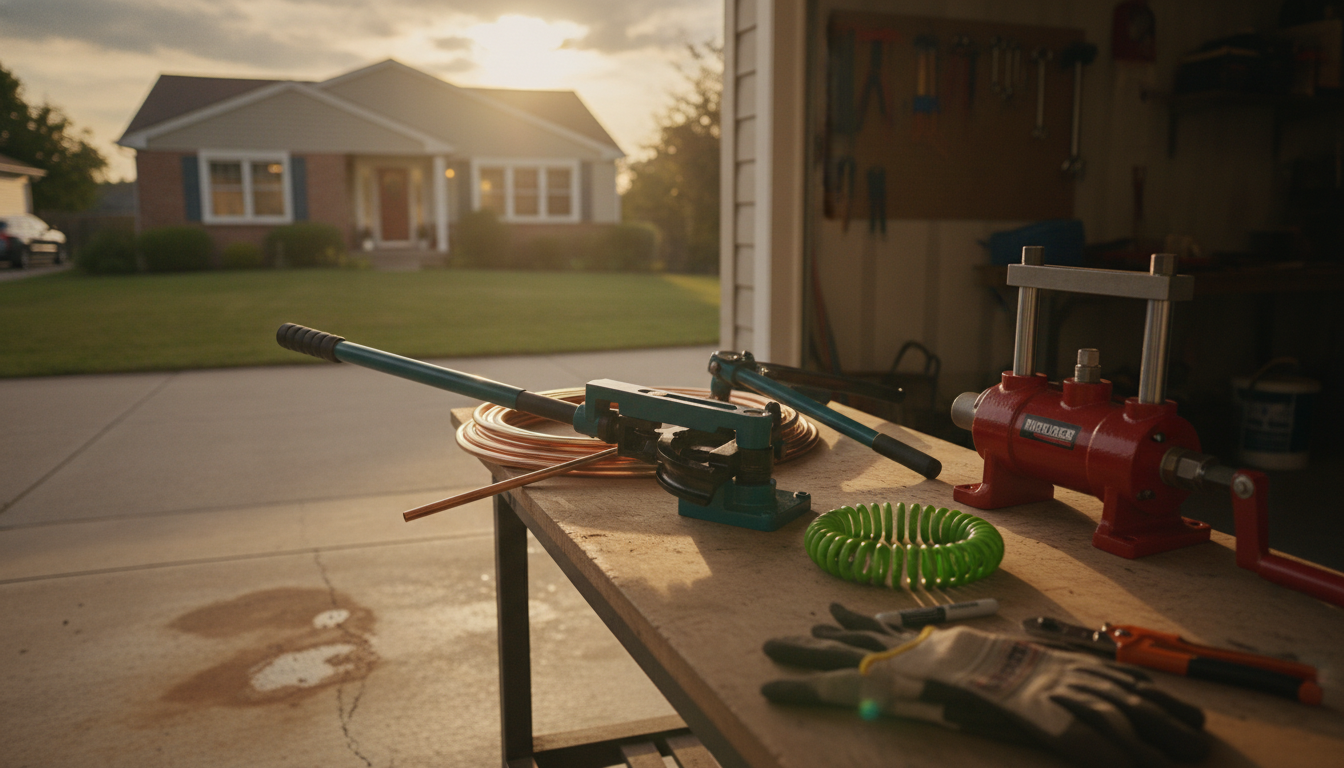
Copper pipe benders come in several styles designed for different tube sizes, bend accuracy, and jobsite conditions. The main types include manual hand benders, spring benders, lever (mechanical) benders, ratcheting benders, and hydraulic benders. Choosing the right one depends on the pipe diameter, wall thickness, bend radius required, and how many bends you need to make.
Manual hand benders are common for small-diameter soft copper tubing used in plumbing and HVAC lines. They typically have a formed shoe and a handle that guides the tube around a fixed radius. They’re portable, fast to set up, and best when you need consistent bends in 1/4 in. to 1/2 in. tubing (varies by model).
Spring benders are coiled springs that slide over (external) or sometimes into (internal) soft copper tubing to help prevent kinks during a bend. They’re inexpensive and handy for quick, gentle bends, especially in tight spaces. They’re less precise for repeatable angles, and they work best on smaller soft copper rather than rigid pipe.
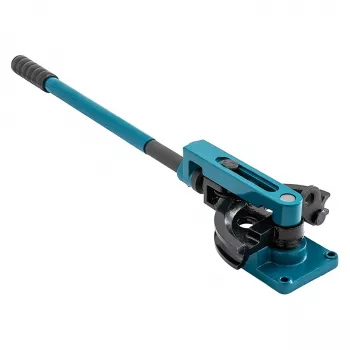
Lever benders use a longer handle and a shaped former to increase control and reduce effort. This style is useful when stepping up in tubing size or when you want smoother bends with less risk of flattening. Many models include angle markings to help hit common bends like 45° and 90°.
Ratcheting benders add a ratchet mechanism that bends the tube incrementally. This helps when space is limited or when working with tougher materials and thicker walls. They’re a solid option for producing accurate bends without needing a long swing arc for the handle.
Hydraulic benders are built for larger diameters and higher-volume work, using a hydraulic ram to apply steady force. They’re heavier and more expensive, but they’re ideal when you need strong, repeatable bends with less manual strain—especially on larger copper tube sizes.
For a deeper breakdown and selection tips, visit the full guide here: https://alazare.com/what-are-the-different-types-of-copper-pipe-benders/.
Match the bender to the exact outside diameter of the tubing and the intended bend radius. Using the wrong size can flatten the tube or cause kinks, especially with harder copper or tighter bends.





Leave a comment