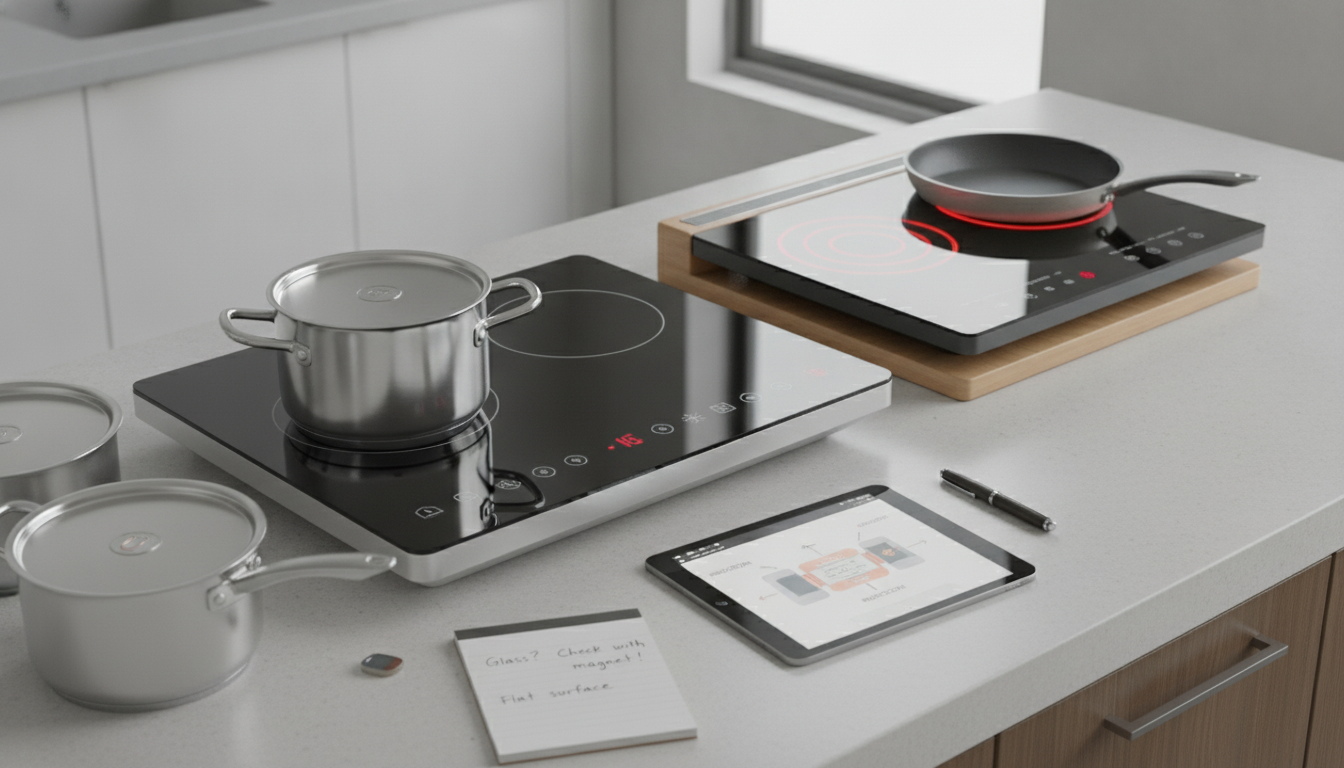
No. A glass cooktop describes the smooth glass-ceramic surface you see on top of many modern ranges and built-in units, but it doesn’t tell you what heating technology is underneath. Induction cooktops are often glass on top, yet many glass cooktops are standard electric radiant models, and a few are even gas-under-glass designs.
The simplest clue is how it heats: induction uses a magnetic field to heat the cookware itself, so the surface around the pan stays comparatively cooler and responds quickly to power changes. Radiant electric glass cooktops heat an element beneath the glass, so the glass surface gets very hot and usually takes longer to ramp up and cool down.
Look for labeling such as “induction,” “magnetic,” or “requires induction-compatible cookware.” Many induction models also have specific control markings and often include features like pan detection or automatic shutoff when a pan is removed.
Induction requires magnetic cookware—typically cast iron and many stainless-steel pans. A quick test is to see whether a magnet sticks firmly to the bottom of the pan. If it doesn’t, it won’t work on induction, even though it may work fine on a radiant glass cooktop.
Because both induction and radiant electric cooktops can look nearly identical from above: a flat, glossy surface with printed burner outlines. The difference is the internal heating method, not the glass top itself. If you’re shopping or troubleshooting, the model number and product specs are the most reliable way to confirm what you have.
For a deeper breakdown and additional tips, visit the main guide here: https://alazare.com/are-all-glass-cooktops-induction/.
Use a magnet: if it sticks strongly to the pan’s base, it’s likely induction-compatible. If the magnet doesn’t stick, the pan won’t heat on an induction cooktop.



Leave a comment