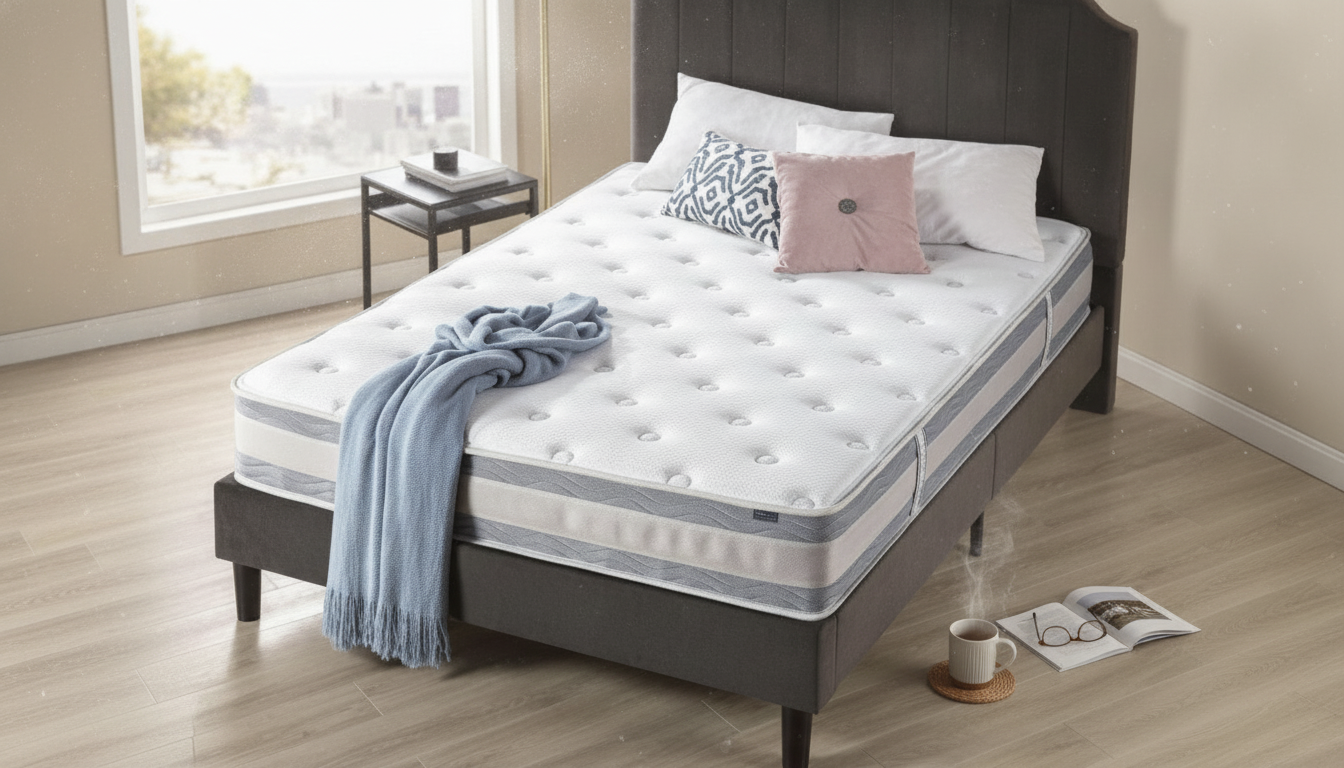
A hybrid mattress blends the contouring feel of foam with the responsive support of coils, aiming to reduce pressure points without the “stuck” sensation. The result is a sleep surface that can feel cushioned on top while staying buoyant and stable underneath—especially helpful for people who want comfort without giving up alignment. Below is a practical guide to what to look for in a comfort-focused hybrid, who it tends to suit best, and how to set it up for long-lasting performance.
A comfort-forward hybrid is designed to feel inviting as soon as you lie down, while still offering noticeable lift and structure from the coil core. Compared with many all-foam beds, you’ll typically notice:
Hybrids earn their reputation by stacking different materials so each layer does a specific job. When those jobs are balanced well, you get pressure relief without losing support.
These top foams (or similar materials) cradle the body and soften impact at pressure points. For side sleepers especially, this can reduce “sharp” pressure where the shoulder and hip meet the mattress.
Transition foams help prevent the sleeper from “bottoming out.” Instead of sinking abruptly into the firm core, the support ramps up more gradually, which can feel smoother and more controlled.
Pocketed coils distribute weight, promote spinal alignment, and add responsiveness. This is also where many hybrids gain their airy feel compared with dense foam cores.
The cover can change the first impression more than many shoppers expect—quilted tops can feel plusher, while breathable fabrics can improve surface comfort for warm sleepers.
| Layer/Element | Primary Role | What It Changes for Sleepers |
|---|---|---|
| Quilted cover/top panel | Surface comfort and breathability | First impression plushness; can help with airflow |
| Comfort foam (or similar) | Pressure relief and contouring | Reduces sharp pressure at shoulders/hips |
| Transition foam | Smooths the support curve | Less sink; steadier alignment |
| Pocketed coils | Support and responsiveness | Easier movement; better weight distribution |
| Edge reinforcement (varies) | Perimeter stability | More usable sleep area; better sit support |
While personal preference matters, certain sleep styles and needs commonly match well with comfort hybrids:
For broader sleep wellness basics—like keeping a consistent schedule and building a wind-down routine—see guidance from the National Sleep Foundation and the NIH/NHLBI.
Firmness is felt differently depending on body type, sleeping position, and how the comfort layers compress. A reliable starting point:
For additional mattress selection considerations (including comfort, support, and personal needs), the Cleveland Clinic’s mattress guide is a helpful reference point.
If you’re shopping specifically for the “cushioned top + supportive coil lift” feel, the Ultimate Comfort Hybrid Mattress is a strong option to consider—especially when pressure relief is a priority but you still want responsive support for easier movement.
| Detail | Value |
|---|---|
| Name | Ultimate Comfort Hybrid Mattress |
| Price | $1419.49 USD |
| Availability | In stock |
| Product page | https://alazare.com/ultimate-comfort-hybrid-mattress/ |
If screen time is part of your nightly routine, Anti-Blue Light Gaming Glasses can be a practical add-on to support a more comfortable pre-bed environment, especially for late-night readers or gamers.
Many sleepers notice a short break-in and adjustment period, often around a couple of weeks. As the materials relax and your body adapts to new support, the feel can become more consistent and comfortable.
Hybrids are often a solid choice because the coil layer allows more airflow than many dense foam cores. Temperature also depends on the cover fabric and the type of foam used in the comfort layers.
A sturdy platform bed or a slatted foundation with proper spacing typically works best to keep support even. It’s also smart to check the manufacturer’s guidance for slat spacing and adjustable-base compatibility.




Leave a comment