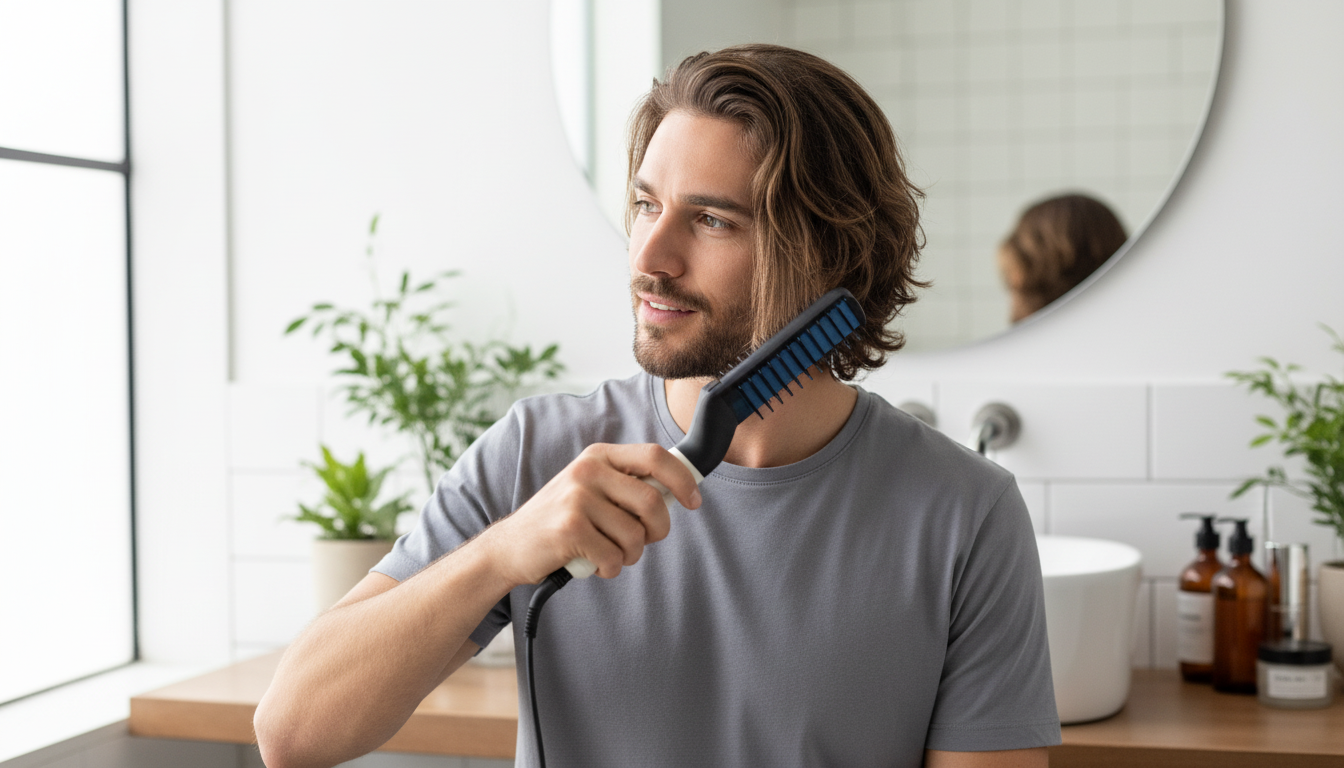
A multifunctional hair styler brush is built to streamline a classic routine: detangle, dry, smooth, and shape—without juggling a separate brush and blow dryer. For many hair types, it’s a practical way to get a brushed-out finish, tame frizz, and add subtle bend at the ends with fewer steps. Below is a clear guide to what these tools do well, who they suit best, the features that matter most, and how to use one while keeping hair health in mind.
Think of a styler brush as a hybrid tool that combines brush control with heat-assisted styling. Instead of switching between a detangling brush and a blow dryer, you work section by section to guide hair into a smoother, more polished shape.
Results depend on hair texture, density, and the look you want. A styler brush typically shines for smoothing and gentle shaping rather than ultra-defined curls.
Small design differences can noticeably change how comfortable the tool is to use and how your hair looks afterward. Focus on adjustability, ease of handling, and safety features you’ll appreciate every day.
| Feature | Why it matters | What to choose |
|---|---|---|
| Multiple heat levels | Helps avoid unnecessary heat exposure | Low for fine/damaged hair; medium/high for thick hair |
| Bristle grip + glide | Reduces snagging while smoothing | Firm enough to guide hair, not sharp or scratchy |
| Brush/head size | Affects speed and precision | Large for long hair; compact for bangs/short layers |
| Swivel cord | Improves maneuverability | 360° swivel preferred for easier sectioning |
| Heat protection design | Helps prevent accidents and wear | Cool-touch areas and auto shutoff if available |
Better results come from consistent prep and controlled sectioning—especially if your hair is thick, long, or frizz-prone.
Heat tools can be used safely, but the “how” matters. Dermatology guidance consistently emphasizes minimizing unnecessary heat and protecting hair from repeated thermal stress. For additional hair-damage prevention tips, see the American Academy of Dermatology Association and a research overview on hair cosmetics and damage via NCBI.
If you want a straightforward tool for daily smoothing and quick shaping, the Multifunctional Hair Styler Brush is a budget-friendly pick that fits neatly into a faster routine. It’s especially handy as a grab-and-go option when time is limited and you still want hair to look neat and polished.
It can simplify day-to-day smoothing and light shaping, especially on damp hair with good sectioning. For very wet hair or a high-volume blowout, a traditional dryer and round brush may still give more power and lift.
Daily use can be okay if you manage heat carefully: use the lowest effective setting, apply heat protectant, and avoid repeated passes on the same section. If hair starts feeling dry or brittle, add conditioning and take rest days from heat.
Start on damp (not wet) hair, use heat protectant, and work in smaller sections with steady tension. Finish with a tiny amount of anti-frizz serum on the ends and let hair cool briefly before touching it too much.



Leave a comment