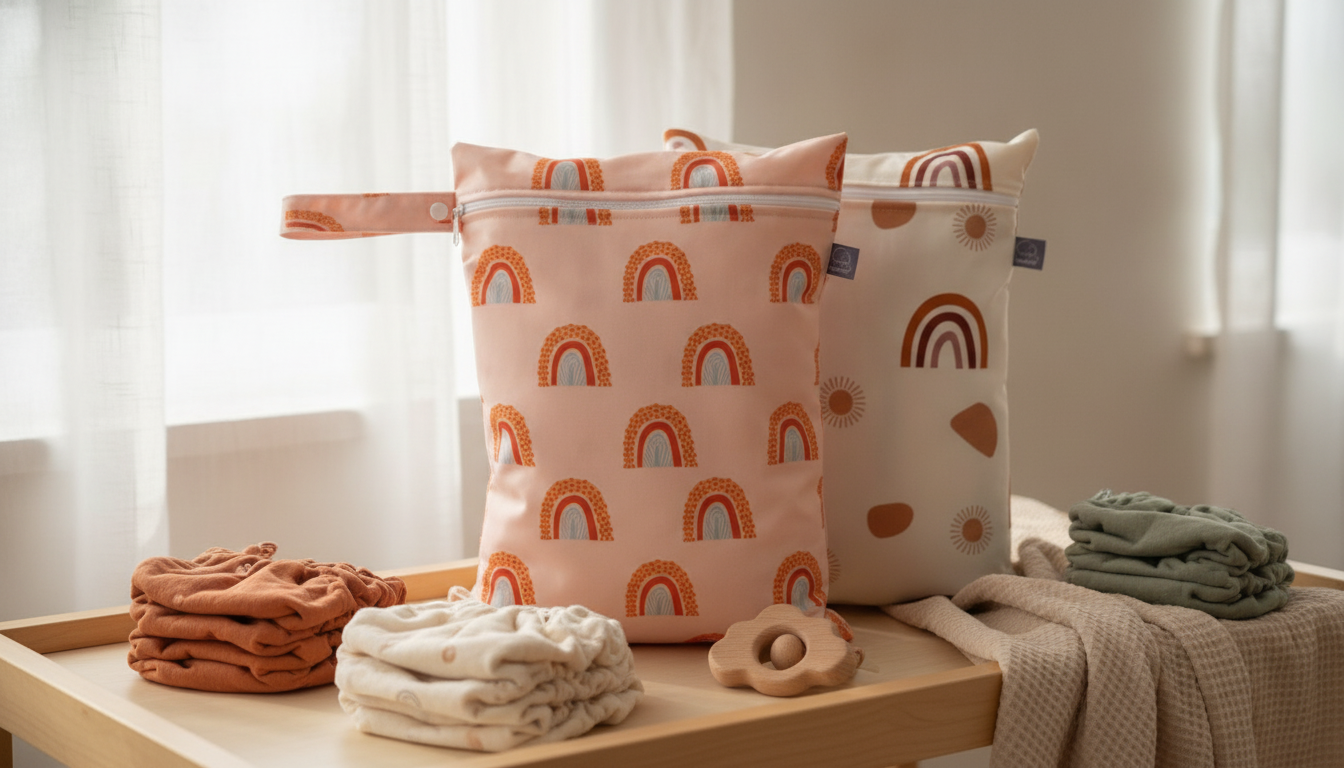
Wet/dry diaper storage bags keep mess contained while making it easier to separate clean essentials from used items on busy days out. A well-planned two-bag setup can reduce leaks, protect spare outfits, and streamline daycare handoffs without relying on flimsy single-use plastic. Below is a practical guide to how a 2-pack fits into everyday routines, what to look for in materials and closures, and realistic tips for odor control, cleaning, and packing.
Wet/dry bags are designed to make “clean vs. used” organization feel automatic. Instead of stacking everything in one compartment, they create a simple system that travels well and cleans up easily.
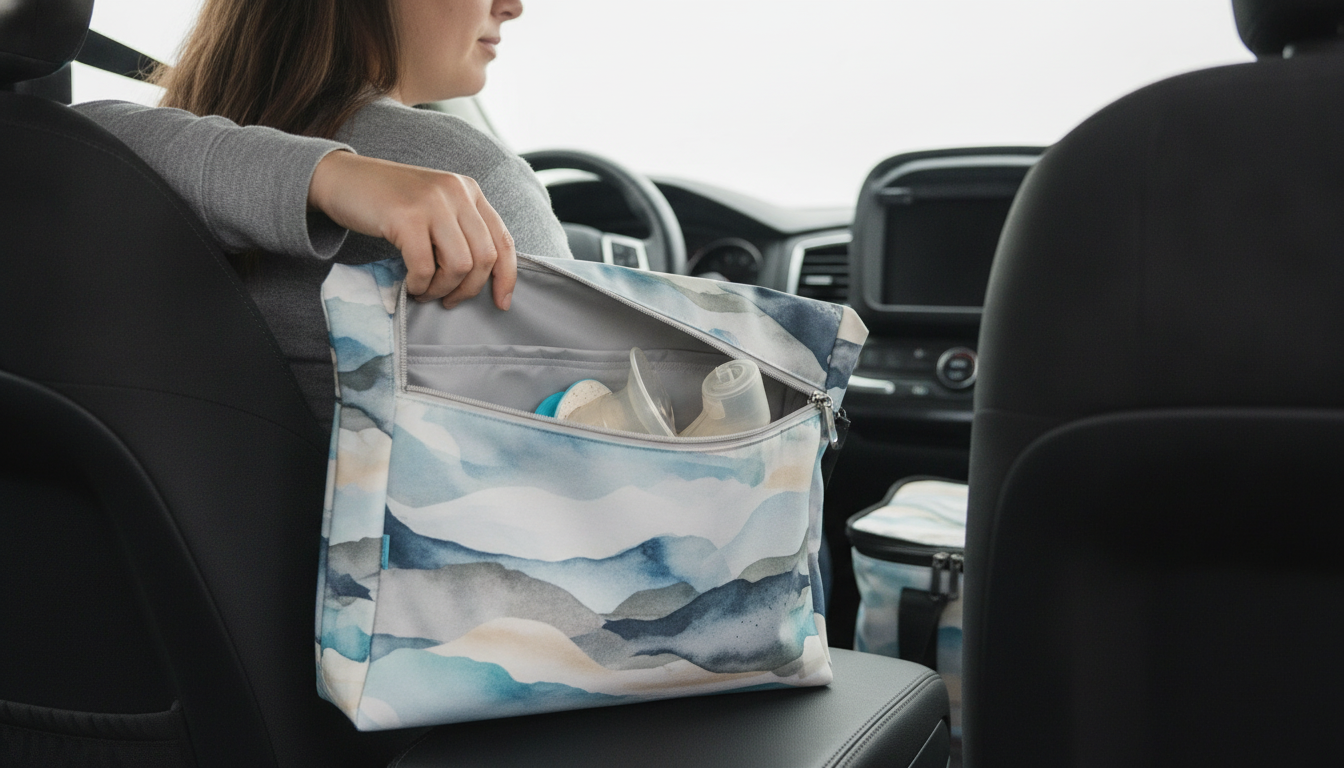
A two-piece set is especially handy because it supports rotation: one stays “ready,” and the other handles whatever comes back home. That rhythm matters on days when you’re changing diapers in a parking lot, a restroom, or a friend’s house.
Not all “waterproof” bags behave the same in real life. The best performance usually comes from a combination of wipeable fabric, reinforced seams, and a closure that stays shut even when your bag gets jostled.
Look for a surface that resists soaking and can be wiped down quickly. A fast-drying material is also helpful when you need to rinse and reuse the bag between loads of laundry.
Seams and stitching are common stress points. Reinforced seams reduce the chance of slow leaks—especially if the bag is packed tightly or stored upright in a crowded diaper bag.
Secure zippers typically contain odors and moisture better than open tops. If you’re using the bag for used diapers, a reliable zipper matters as much as the fabric itself.
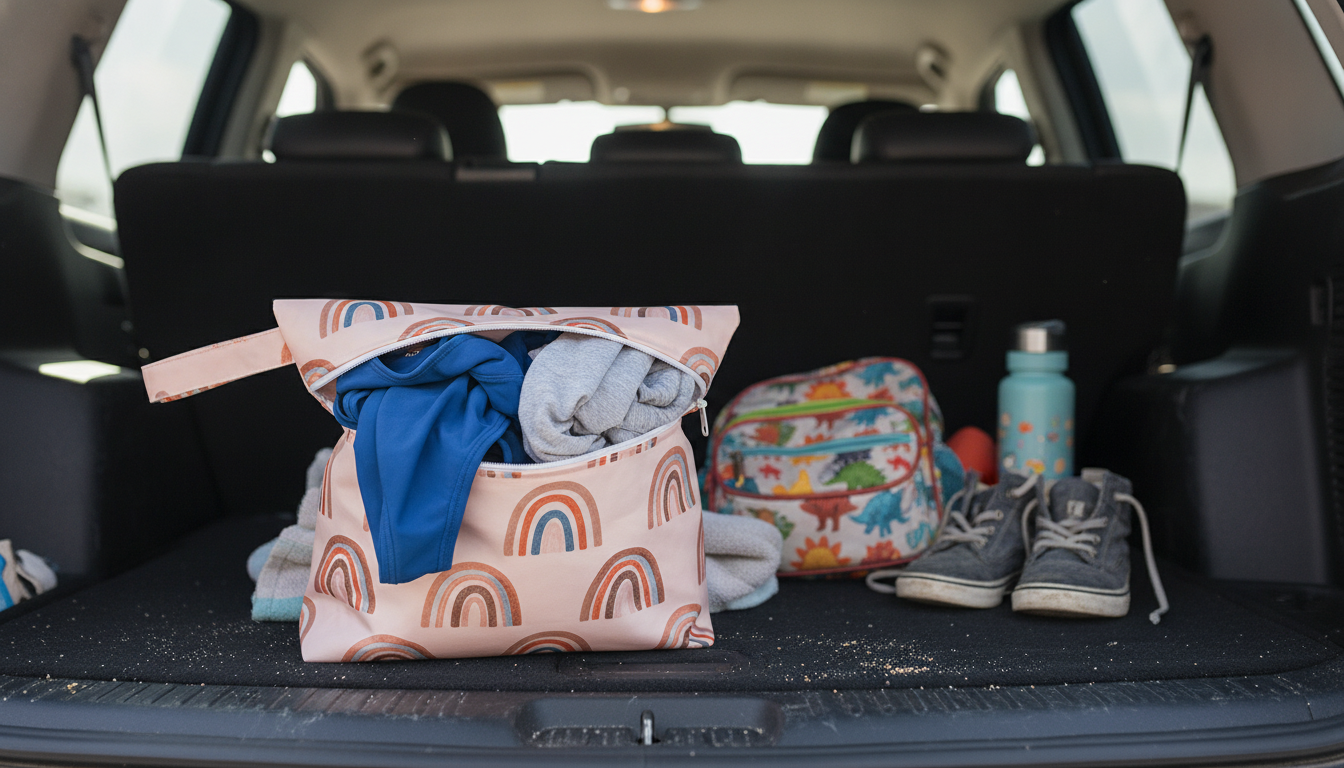
A handle or loop makes it easy to hang the bag on a stroller hook, diaper bag clip, or changing station. Hanging also helps keep wet items away from dry supplies.
| Situation | What to pack | Practical tip |
|---|---|---|
| Daycare (half-day) | 2–4 diapers, travel wipes, wet items on return | Label one bag “clean” and one “used” to avoid mix-ups |
| Errands (1–2 hours) | 1 diaper, small wipes pack, spare onesie | Keep the dry bag nested inside the diaper bag for fast access |
| Cloth diapering day out | 3–6 diapers depending on baby age | Bring a small wet wipe pouch separate from the wet compartment |
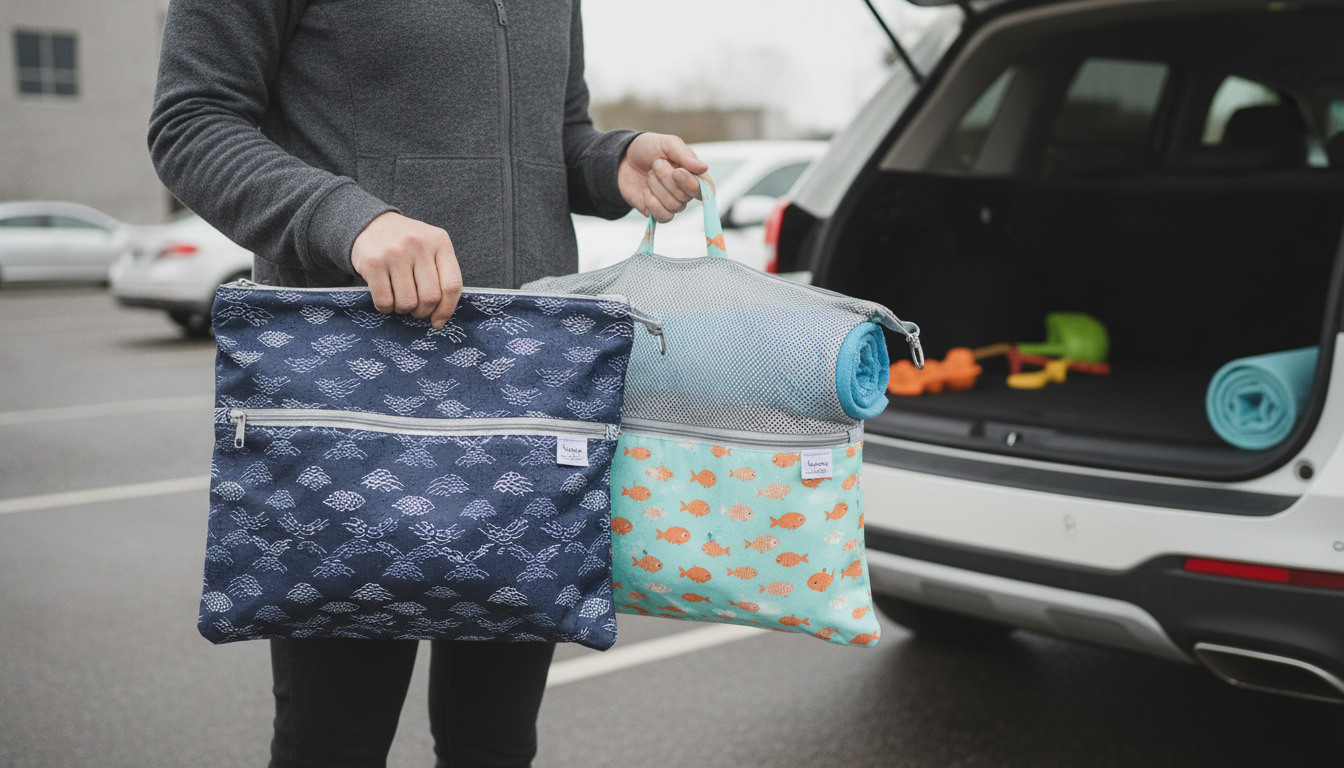
| Pool/playground | Swimsuit, rash guard, small towel | Rinse chlorine off at home and air-dry the bag fully |
For hygiene reminders that fit real life (especially after diaper changes), the CDC’s handwashing guidance is a helpful reference: https://www.cdc.gov/cleanhands/. For childcare environments, the CDC also publishes broader diapering and toileting hygiene resources: https://www.cdc.gov/.
If you’re dealing with frequent moisture against skin (especially during travel or warm weather), general diaper rash guidance from the American Academy of Pediatrics can also be useful: https://www.healthychildren.org/.
For late-night feeds or on-the-go logging, some parents also keep comfort accessories in the same diaper bag system—like Anti-Blue Light Gaming Glasses to reduce screen strain, or a separate outing essential such as a Portable Pet Water Bottle for families who bring a dog along on stroller walks (kept separate from baby items, of course).
If you want an easy rotation system without relying on single-use plastic bags, 2PCS Waterproof Wet/Dry Diaper Storage Bags are available now for quick wet/dry separation at home or on the go. The two-piece setup is ideal for daycare routines, errands, travel days, and splash-play afternoons where you need a dependable “wet goes here” solution.
Secure zippers help, but odor control depends most on how quickly you empty the bag, keeping it out of heat, and removing solids when applicable. For heavy messes, a disposable liner inside the wet compartment can add an extra barrier.
Yes, when you keep used diapers sealed inside the wet bag and store clean clothes in a separate bag or compartment away from feeding items. Wash hands after changes and wipe down any surfaces that may have been splashed or touched.
Rinse residue early, wash on a gentle cycle with mild detergent, and avoid high heat that can wear down water-resistant layers. Air-dry fully with the zipper open, and follow any manufacturer care guidance when available.



Leave a comment