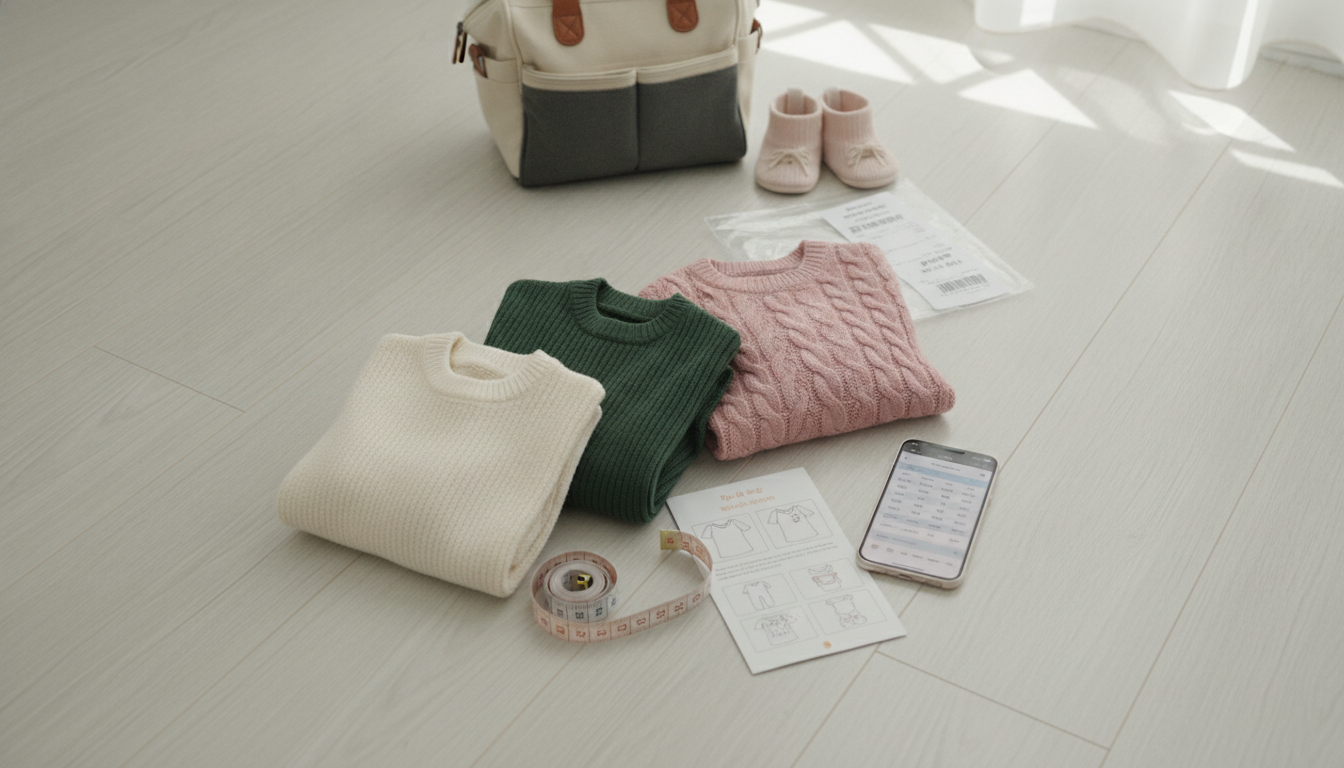
Start with your baby’s current measurements, not just their age. Baby clothing sizes vary widely by brand, and sweaters can fit differently depending on knit, cut, and whether the style is meant to be snug or roomy.
If possible, measure your baby’s chest (around the fullest part), length (shoulder to hip), and sleeve length (shoulder to wrist). Many online size charts list chest and length; those two numbers are usually the most helpful for sweaters. If your baby falls between sizes, consider the intended fit and layering (a sweater over a onesie vs. over thicker clothes).
Some charts rely on weight and height ranges, which can be a quick guide when exact garment measurements aren’t provided. If your baby is long for their weight (or vice versa), prioritize chest and sweater length so the sweater doesn’t ride up or feel tight through the body.
Rib knits and cotton blends often have more give, while tightly woven or less stretchy yarns may feel smaller. If the product description mentions “runs small,” “slim fit,” or “no stretch,” sizing up is often safer—especially for babies with fuller arms or a rounder tummy.
For colder months, a slightly roomier sweater allows comfortable layering and better movement. For mild weather or indoor wear, a closer fit may be fine. If you plan to use the sweater for more than a few weeks, choosing the larger of two sizes can extend wear time without sacrificing comfort.
Even with careful measuring, fit can be unpredictable. Double-check the return window and whether exchanges are easy, especially if you’re buying ahead for a milestone or holiday.
For a deeper walkthrough and extra sizing tips, visit the main guide on choosing the right baby sweater size online.
Size up if your baby is between sizes, if the sweater is described as slim or runs small, or if you want room for layering. If the knit is very stretchy and you prefer a neat fit, staying true to the size chart is usually enough.




Leave a comment